What Is the Best Contractor Equipment in China?

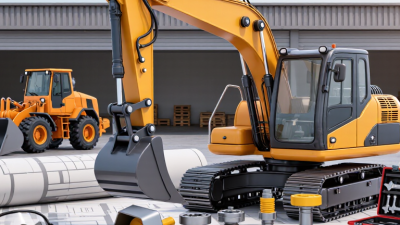
Choosing the best contractor equipment in China is not a simple brand comparison. The right machine must match the job, terrain, workload, and local service network. A compact excavator may suit a narrow urban site, while a larger model can move more soil on a broad infrastructure project. Downtime matters, too. A machine waiting for parts is an expensive machine.

China’s Construction Machinery Association reported that construction machinery exports reached approximately US$50.69 billion in 2023, up 9.57% year over year. This figure shows the scale of China’s equipment sector, but export value alone cannot identify the best choice for a particular contractor. Chris Sleight, managing director of Off-Highway Research, has highlighted China’s importance to the global construction equipment market. His market perspective is a useful reminder: “China’s market scale makes local requirements especially important.” Buyers should compare verified operating data, fuel use, component quality, warranty terms, and access to trained technicians.

Details make the difference. Check how quickly a dealer can supply filters, hydraulic hoses, or a replacement tooth. Ask for a machine demonstration under conditions close to your own site. Then compare the full cost of ownership, not just the purchase price. No single model wins every job. Even a respected brand can disappoint when its support network is thin. The sections ahead examine leading equipment categories, practical selection criteria, and the trade-offs contractors should weigh before buying.
What Is the Best Contractor Equipment in China?

What Contractor Equipment Includes and How It Is Classified

Contractor equipment covers the machines and tools used to prepare sites, move materials, build structures, and finish surfaces. It is commonly classified by its main task. Earthmoving equipment includes excavators, loaders, and bulldozers; these machines dig, lift, or shift soil. Material-handling equipment, such as forklifts and telehandlers, moves pallets, pipes, and other loads. Concrete and roadwork equipment includes mixers, pumps, pavers, and rollers. Smaller support equipment may include generators, compressors, and lighting towers. These categories can overlap: a loader may move soil on one site and stockpiled aggregate on another.

Tips: Match equipment to the ground, access, and load. Check operating weight, reach, and rated capacity against the work area. A narrow gate or soft surface can matter more than engine power. Confirm maintenance records and operator training before use.

Equipment can also be classified by mobility, size, and power source. Tracked machines often provide grip on uneven ground, while wheeled units can travel more easily across firm surfaces. Compact equipment suits confined spaces, though it may work more slowly on large projects. Electric models can reduce local exhaust, but charging access and runtime need planning. Classification is a useful starting point, not a buying formula; site conditions are rarely as tidy as a category chart suggests.

Key Criteria for Choosing Contractor Equipment in China

What Is the Best Contractor Equipment in China?

Key Criteria for Choosing Contractor Equipment in China

The best machine is the one that fits the worksite, not the biggest one on the sales sheet. Check load capacity, digging depth, lift height, and turning radius against the actual job. On soft ground, track width and ground pressure matter; in tight urban sites, transport dimensions and noise limits can decide whether equipment is usable. Small details count.

Demand is substantial: China’s National Bureau of Statistics reported construction output value of 31.59 trillion yuan in 2023, up 5.8% year on year. That scale does not make every purchase worthwhile. Compare total operating cost, including fuel or electricity, routine maintenance, parts availability, and expected downtime. McKinsey’s 2017 report Reinventing Construction found global construction productivity grew about 1% annually over two decades, versus 2.8% for the wider economy. Utilization deserves scrutiny. A low purchase price can hide expensive idle hours.

Before choosing, ask local operators to assess service access and common site conditions. Test the machine with realistic materials, not just an empty-yard demonstration. I would still treat quoted operating costs cautiously; real fuel use varies with soil, operator habits, and workload. That uncertainty matters.

What Is the Best Contractor Equipment in China?

Key criteria for choosing contractor equipment in China

Example project-specific rubric, not a national survey or market ranking. Score each criterion from 1 (low priority) to 5 (high priority) for your project. Verify machine suitability, local emissions requirements, parts availability, service support, and total cost of ownership before buying.

Leading Types of Contractor Equipment for Different Projects

For roadwork and site preparation, excavators, bulldozers, and motor graders handle different tasks. An excavator can dig foundation trenches and load spoil into dump trucks. A bulldozer is better for pushing soil across a rough site, while a grader creates a smoother road surface.

China’s National Bureau of Statistics reported that the construction industry’s value added reached 8.56 trillion yuan in 2023. That scale reflects varied projects, not one ideal machine choice.

Lifting work calls for truck cranes, crawler cranes, or rough-terrain cranes. The right option depends on lifting capacity, ground conditions, and how often the machine must move.

For road paving, asphalt pavers and compactors work together: one lays the mat, and the other reduces air gaps.

Small urban sites may need compact equipment instead. Access can matter more than maximum output.

Indoor demolition and enclosed work areas may benefit from compact electric machines, where charging and duty cycles allow.

The UNEP 2024/2025 Global Status Report for Buildings and Construction says the sector accounts for 32% of global energy use and 34% of CO₂ emissions. That figure covers buildings and construction broadly, not equipment alone.

Electric machinery can reduce on-site exhaust, but it is not automatically practical. I would check charging access, runtime, and service support before specifying it.

That step is easy to overlook.

Major Chinese Manufacturers and Their Equipment Strengths

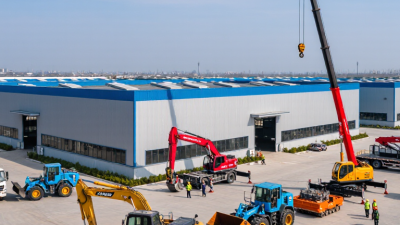
China’s major equipment manufacturers are strongest where scale, hydraulics, and component supply meet. Their portfolios commonly include excavators, wheel loaders, mobile cranes, concrete pumps, and road-building machines. Excavators suit varied sites, from muddy foundations to narrow urban projects. Cranes and concrete equipment serve lifting and placement work on larger builds.

The China Construction Machinery Association reported 201,131 excavator sales in 2024, including 100,588 exports. This shows a substantial production base and overseas reach, but sales alone cannot prove durability or after-sales quality. That matters. Buyers should compare operating weight, fuel use, attachment compatibility, and local parts availability against the actual job. A machine that looks powerful on paper may be costly when filters or hydraulic seals are hard to source.

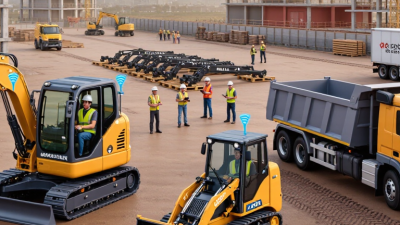
Chinese manufacturers also compete through broad equipment ranges and increasingly connected controls. Telematics can help track idle time, service intervals, and fuel consumption on a busy site. Yet software features vary, and connectivity may be unreliable in remote areas. I would not treat a dashboard as evidence of lower lifetime cost. Inspect welds, hose routing, cab visibility, and service access; these small details often shape daily uptime.

How to Match Equipment to Project Needs, Budget, and Site Conditions

Choosing contractor equipment in China starts with the work, not the catalog. For a foundation job, excavator size should match digging depth, soil, and truck access. Narrow urban sites may favor compact machines, while open earthworks can justify higher capacity. Check operating weight against ground conditions. Soft, rain-soaked soil can quickly change the best choice. Measure gates, turning areas, and overhead clearance before delivery.

Budget should include more than purchase or rental price. Add transport, fuel, wear parts, operator availability, routine service, and likely downtime. A cheaper machine can cost more when replacement parts take days to arrive. Ask suppliers about service intervals and realistic parts lead times in the project region. Compare hourly output, not just engine power. Small details matter.

Site conditions often decide the final match. On steep or uneven ground, prioritize stability and traction; in dusty demolition work, consider filtration and protective features. For road projects, check travel speed and how often equipment must move between sections. Confirm access windows, noise constraints, and nearby utilities before mobilization. Plans change. Keep some budget flexible. One assumption may still be wrong, so review fuel use, cycle times, and repair notes during the first week. Adjust the equipment mix when the evidence points elsewhere.

What Is the Best Contractor Equipment in China? - How to Match Equipment to Project Needs, Budget, and Site Conditions

The best choice depends on the work, ground conditions, access, and expected utilization. The purchase-price ranges below are indicative estimates for new equipment in China in CNY; actual prices vary by configuration, emissions standard, attachments, taxes, and supplier terms.

Equipment Type Typical Project Needs Typical Capacity or Size Indicative New Purchase Budget (CNY) Site Conditions and Practical Fit How to Match It to the Project
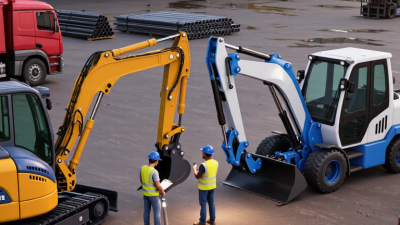
Compact excavator Utility trenches, landscaping, small foundations, and indoor or restricted-access work Approximately 1–6 tonnes operating weight ¥80,000–¥350,000 Best for narrow access and smaller work areas. Low ground pressure helps limit surface damage, but compact models have less digging reach and output. Choose a compact model when access is more limiting than production speed. Check transport width, tail-swing clearance, and attachment compatibility.
Medium excavator General earthmoving, roadwork, drainage, and building-site excavation Approximately 20–25 tonnes operating weight ¥350,000–¥800,000 Versatile on established construction sites with adequate working room. Soft or waterlogged ground may require track or ground-pressure considerations. A common all-round choice for sustained earthmoving. Compare digging depth, bucket size, fuel use, service access, and the cost of hauling between sites.
Wheel loader Loading aggregate, moving soil, stockpile handling, and feeding batching operations Approximately 2–5 tonnes rated payload ¥200,000–¥650,000 Works efficiently on firm, relatively level surfaces. Muddy ground, steep gradients, or frequent travel over rough terrain can reduce traction and productivity. Size the bucket and payload to the truck or stockpile workflow. Avoid buying excess capacity if the site has limited turning space or light-duty daily tasks.
Bulldozer Bulk pushing, site clearing, rough grading, and spreading fill Approximately 100–220 horsepower ¥500,000–¥1,600,000 Tracks provide traction on loose or uneven ground. The machine is less suitable for long-distance material transport or finished grading that needs tight tolerances. Match blade type and machine weight to material and push distance. Consider whether a grader or excavator would be more efficient for the planned work.
Dump truck Transporting soil, aggregate, and construction spoil within or between sites Typically 8×4 configuration; payload depends on vehicle specification and local road limits ¥250,000–¥700,000 Requires haul routes with sufficient width, turning space, and bearing capacity. Local road regulations and site access can restrict vehicle size and payload. Calculate haul distance, loading time, route conditions, and legal payload before selecting capacity. A smaller truck may be more productive on narrow urban sites.
Vibratory soil roller Compacting soil and granular subbase for roads, platforms, and foundations Approximately 10–14 tonnes operating weight ¥180,000–¥500,000 Most effective on suitable soil or granular layers with enough room for consistent rolling passes. Cohesive soils may require a different drum configuration or compaction method. Match drum type, vibration settings, and compaction depth to the material and specification. Verify the required density testing method and number of passes.
Motor grader Road shaping, surface leveling, ditch formation, and fine grading Typically 120–220 horsepower ¥600,000–¥1,800,000 Needs room for long, controlled passes and is most useful on road or site works with measurable grading requirements. Consider rental for short-duration or occasional grading. For purchase, estimate annual operating hours and confirm blade options and operator availability.
Mobile crane Lifting structural components, equipment, and materials on temporary or changing sites Common capacity range: approximately 25–100 tonnes ¥500,000–¥3,000,000 Requires suitable ground bearing capacity, outrigger space, safe access, and a clear lifting zone. Actual lift capacity decreases with radius and boom configuration. Use the load chart for the heaviest lift at the required radius; do not select by maximum rated capacity alone. Hiring is often practical for intermittent lifts.
Truck-mounted concrete pump Placing ready-mixed concrete on building and infrastructure projects Common boom lengths are approximately 30–52 metres ¥1,500,000–¥4,000,000 Needs stable setup ground, adequate outrigger clearance, and a route that accommodates the truck. Overhead obstructions and restricted streets can limit boom placement. Choose boom length based on the pour location and site layout. Compare expected utilization with hiring costs, cleaning arrangements, and maintenance requirements.
Telehandler Moving palletized materials and lifting loads around building sites Typically 3–5 tonnes rated capacity with varying lift height ¥300,000–¥1,000,000 Useful where a forklift cannot reach the work area. Capacity changes with boom extension and load position; soft ground and slopes require extra care. Check the load chart at the required reach and height, not just the headline capacity. Confirm attachment needs and whether the site permits the machine’s travel path.