
Concrete may arrive as a carefully designed mix, but the finished slab depends on what happens next. Concreting equipment helps crews move, place, compact, and finish concrete with greater control. A pump can deliver wet concrete to a raised deck. A vibrator can help remove trapped air around reinforcing steel. A screed can leave a more even surface across a floor. These are practical differences, not showroom details.
Dr. Kamal H. Khayat, a concrete materials researcher, has studied how mixture design and construction practices affect concrete performance. A fair paraphrase of the lesson reflected in his research is this: concrete quality depends on both the mix and how crews handle it. That distinction matters. Even suitable equipment cannot correct every mix problem, poor timing, or careless operation. Nor does buying larger machinery guarantee better results. Small errors travel. A vibrator used too long, for example, can contribute to segregation in some mixes; crews must follow the mix requirements and project specifications. The right equipment should match the pour size, access, concrete properties, and available crew skills. This guide explores why concreting equipment matters, what key machines do, and how thoughtful selection supports safer, more consistent work. It also leaves room for an honest question: are teams choosing equipment for the job, or simply repeating familiar habits?
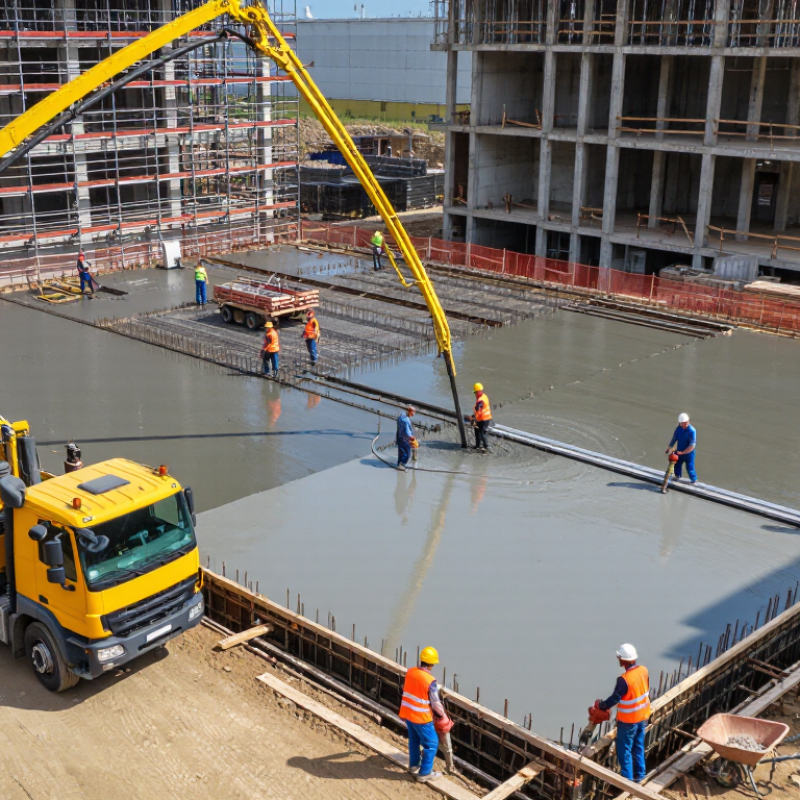
Concrete construction relies on different equipment at each stage, from mixing to surface finishing. Small projects may use a portable mixer, while larger pours often need a batching plant to measure cement, aggregates, and water consistently. A wheelbarrow or concrete buggy moves smaller loads across short distances. For long slabs or hard-to-reach areas, a concrete pump delivers the mix through a hose. Access matters: a pump can save time, but its setup needs clear space and careful coordination.
Once concrete is placed, internal vibrators help remove trapped air, especially around reinforcing bars and inside forms. Over-vibration can separate the mix, so operators need to match their technique to the concrete and placement conditions. Timing matters. Screeds level the surface, while bull floats smooth broad areas before the concrete begins to stiffen. Edges and corners often need hand tools, since large equipment cannot reach every spot.
Finishing tools include hand trowels and power trowels, selected according to the slab’s size and desired texture. Curing equipment, such as water sprayers or protective coverings, helps limit moisture loss after placement. Not every site needs every machine. A common planning mistake is choosing equipment by capacity alone; ground conditions, pour access, crew skill, and delivery timing can change what works. Some details only become obvious on site.
Concrete quality depends on more than the mix design. Equipment shapes how evenly materials combine, how quickly concrete reaches the form, and how cleanly the surface is finished. A mixer with consistent rotation helps disperse cement, aggregate, and water, reducing dry pockets and uneven texture. Still, equipment cannot correct a poor water measurement. That part is easy to overlook.
During placement, pumps, chutes, and wheelbarrows help move concrete before it begins to stiffen. The right method depends on access, volume, and distance. A pump can reach a raised slab, while a chute may suit a nearby footing. Vibrators remove trapped air around reinforcement, but excessive vibration can separate the mix. Finishing tools then level edges and smooth the surface at the right time. Timing matters. A float used too early may bring excess water upward.
Tips: Check guards, hoses, and power connections before work starts. Clean tools before concrete hardens. Match equipment capacity to the pour, not just the crew’s preference. Watch the surface as it changes; planned timing may need adjustment. A rushed finish can leave rough patches or weak edges.
Why Is Concreting Equipment Important for Construction?
How Concreting Equipment Improves Quality and Consistency
Consistent concrete starts with accurate batching and continues through mixing, placement, and finishing. Calibrated scales and water meters help keep each load close to the specified mix. Mixers maintain an even blend, while pumps and vibrators help crews place and compact concrete before it begins to set. A steady screed pass can leave a more uniform slab surface. Small details matter.
The National Ready Mixed Concrete Association’s Concrete in Practice 26 gives a useful rule of thumb: adding one gallon of water per cubic yard may increase slump by about one inch and reduce compressive strength by 150 to 200 psi. Actual results vary by mix and conditions, but the example shows why controlled water measurement matters. Equipment improves consistency; it does not guarantee it. Worn tools or rushed operation can still leave voids or uneven finishes.
Tips: Check meter calibration before the pour. Keep the vibrator moving steadily, and avoid prolonged vibration in one spot. Record slump and batch details; those notes can reveal patterns, though they will not explain every defect. A well-equipped crew still needs sound judgment.
| Equipment | Construction Stage | Quality Contribution | How It Supports Consistency | Practical Check |
|---|---|---|---|---|
| Batching equipment | Measuring and proportioning materials | Accurate measurement helps keep cement, aggregates, water, and admixtures within the specified mix proportions. | Repeatable batching reduces variation between loads when equipment is correctly calibrated and operated. | Check calibration, scale readings, moisture corrections, and batch records. |
| Concrete mixer | Mixing materials | Adequate mixing distributes the ingredients and helps produce a uniform concrete mixture. | Consistent loading and mixing time help limit differences in appearance and workability between batches. | Follow the approved mixing procedure and inspect the drum, blades, and discharge for buildup or wear. |
| Transit mixer | Transporting ready-mixed concrete | Agitation during delivery helps maintain a workable mixture and limit segregation during transport. | Controlled delivery practices help keep loads within the project’s specified handling and placement requirements. | Record batching and arrival times; check the delivery ticket and concrete condition before placement. |
| Concrete pump | Placing concrete | Provides controlled delivery to locations that may be difficult to reach with direct discharge. | A planned pumping rate and placement sequence help maintain a steady supply and reduce interruptions. | Inspect and secure the pipeline, confirm the mix is suitable for pumping, and monitor the pour sequence. |
| Internal concrete vibrator | Consolidating freshly placed concrete | Appropriate vibration helps release entrapped air and allows concrete to fill around reinforcement and within forms. | A consistent insertion pattern and suitable vibration reduce the risk of honeycombing and uneven consolidation. | Use the method and duration suited to the mix and placement; avoid prolonged vibration that can cause segregation. |
| Screed | Leveling slabs and floors | Helps establish the specified surface level and an even profile. | Using consistent reference points and screeding methods helps create more uniform surface elevations. | Check forms, level guides, and finished elevations against the project drawings. |
| Power trowel | Finishing concrete floors | Can help produce a flatter, smoother surface when used at the appropriate stage of finishing. | Consistent blade settings and finishing passes help reduce differences across the slab. | Time finishing to the concrete’s condition and follow the specified surface-finish requirements. |
| Curing equipment and coverings | Protecting concrete after placement | Helps maintain moisture and temperature conditions that support cement hydration and strength development. | Applying the specified curing method consistently helps limit uneven drying and surface cracking risk. | Start curing at the required time and maintain the method for the period specified for the project. |
Equipment selection and operating procedures should match the concrete mix, placement conditions, project specifications, and applicable standards.
Concrete work depends on timing. A mixer that delivers a steady batch and a pump sized for the site can keep placement moving before the concrete begins to stiffen.
A working vibrator helps remove trapped air around reinforcement, while a suitable screed supports a more even finish. Small delays add up. Crews may wait, restart equipment, or rush finishing when deliveries and machine capacity do not match.
Equipment also changes project costs and job-site risks. A breakdown can waste concrete and labor; poor compaction may lead to repairs later. Renting or buying should account for transport, fuel, maintenance, and the cost of downtime, not just the machine’s daily rate.
On a narrow site, a large pump may create access problems rather than save time.
Bigger is not always better.
Operators need clear instructions, inspected hoses and guards, and room to work without people crowding moving equipment. Still, equipment cannot fix a weak pour plan. It is easy to expect machines to compensate for poor coordination, and that assumption deserves a second look.
Selecting concreting equipment starts with the job itself. A small patio, a multi-storey slab, and a road pour demand different output, reach, and mobility. Estimate the volume of concrete, placement distance, and working space before choosing a mixer, pump, vibrator, or finishing tool. Small details matter. A pump that cannot reach around a building may add costly manual handling.
Check the site conditions and the concrete mix. Narrow access, uneven ground, and limited power can rule out otherwise suitable machines. Match equipment capacity to the expected pour rate, not just the largest possible workload. Oversized machinery can be difficult to position; undersized equipment may leave concrete waiting in the mixer. That delay can affect placement and surface quality.
Operator skill, maintenance, and safety features deserve equal attention. Confirm that workers can use the controls confidently, and inspect guards, cables, hoses, and emergency stops before work begins. Ask how quickly routine parts can be serviced, since downtime during a pour is rarely convenient. Rental equipment may look ready, but worn hoses or a weak vibrator can be missed in a rushed check. A brief site trial can reveal awkward handling before concrete arrives.
Choosing equipment that matches the pour helps maintain placement quality, productivity, and site safety.
Illustrative planning ratings (1 = lower priority, 5 = higher priority), not survey results. Assess each factor against the specific project, concrete mix, and site conditions.