For global contractors, choosing the right excavation equipment supplier can shape project costs, safety, and delivery schedules. A reliable supplier offers more than machines. It provides tested specifications, operator guidance, replacement parts, and responsive technical support.
Caterpillar Chairman and CEO Jim Umpleby has stated, “Our customers’ success is our success.” This principle matters when buyers compare excavators, loaders, bulldozers, and compact equipment across international markets. The best supplier should understand local ground conditions, transport limitations, fuel availability, and service expectations. A machine working beside a rocky trench needs different strengths from one operating on soft urban soil. Small details matter.
This guide reviews leading excavation equipment suppliers for global buyers. It considers product range, machine durability, technology, dealer coverage, maintenance support, financing options, and total ownership cost. Purchase price alone can mislead. A cheaper excavator may lose value through frequent downtime, delayed parts, or poorly trained operators.
Look beyond the brochure.
Experienced buyers often request service records, warranty terms, hydraulic performance data, and references from similar projects. Independent inspections can also reveal weaknesses before payment. Still, no supplier ranking fits every application. That assumption can fail. A major brand may lack strong support in one region, while a smaller distributor may respond faster and understand local needs better.
The comparisons ahead aim to support careful decisions, not promote one universal winner. Global procurement requires evidence, practical judgment, and some humility. Machines perform differently outside the showroom. Reliability is proven on site.
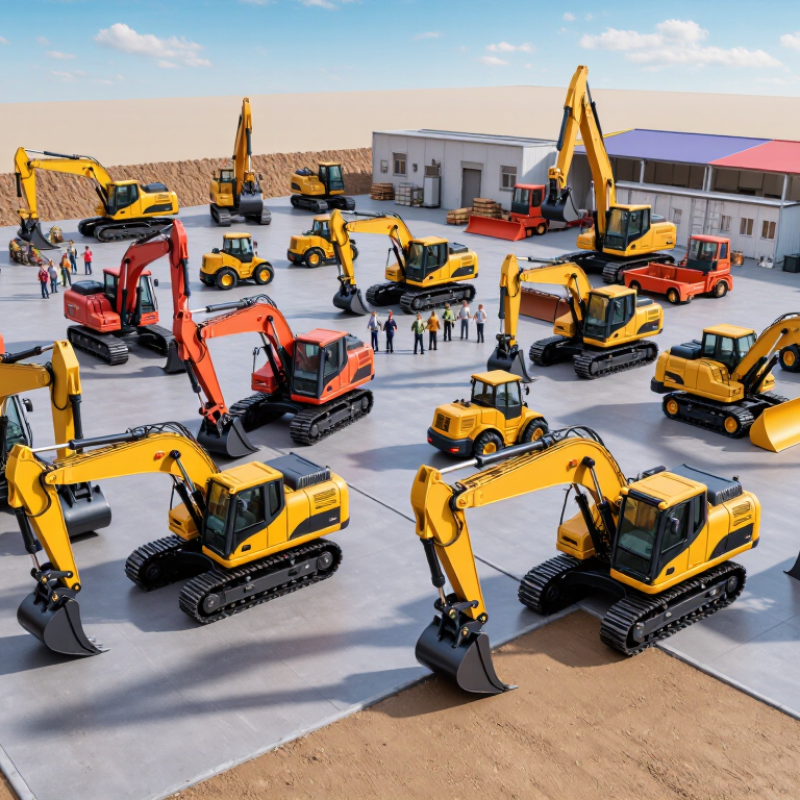
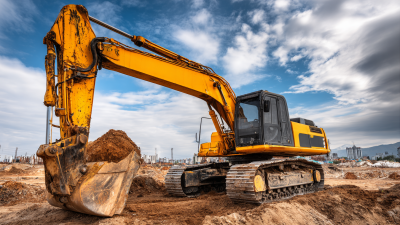
Excavation equipment covers more than standard digging machines. Hydraulic excavators remove soil, rock, and demolition debris with controlled bucket movements. Mini excavators work well in narrow urban sites and landscaped areas. Crawler excavators provide stability on soft ground. Wheeled excavators move faster between paved work zones. Backhoe loaders combine digging and loading functions for utility repairs and small construction projects.
The right attachment changes the machine’s role. Buckets handle trenching and bulk excavation. Breakers fracture concrete and weathered rock. Augers create foundation or fence-post holes. Grabs sort waste and place materials precisely. Fortune Business Insights reported that the global excavator market reached about USD 63.8 billion in 2023, with continued growth expected through 2032. Grand View Research also identifies infrastructure development and construction activity as major demand drivers. These figures vary by research method. Treat them as directional, not absolute.
Tips: Match operating weight to soil conditions, access limits, and lifting needs. Check hydraulic flow before selecting attachments. Measure transport width carefully; a machine that fits the site may not fit the road. Fuel use matters, but idle time can matter more. Experience shows that larger equipment is not automatically better. A compact excavator can reduce surface damage and repositioning time. Still, productivity estimates often ignore operator skill, weather, and ground changes. That is where purchasing plans need honest review.
Global buyers should evaluate excavation equipment suppliers beyond quoted price. KHL’s 2024 Yellow Table recorded more than one million construction machines sold worldwide in 2023. That scale increases comparison risk. Ask for verified production capacity, delivery records, and references from projects with similar soil conditions. A supplier experienced with granite, clay, or saturated ground understands practical limits better than a polished brochure.
Technical support deserves equal attention. Compare engine efficiency, hydraulic performance, attachment compatibility, and undercarriage life. Request test reports, service intervals, parts lead times, and remote monitoring details. The ISO 15143-3 standard supports consistent machine-data exchange, but not every supplier offers complete access. Check this carefully. A low purchase price can become expensive when one sensor waits six weeks at a border. The World Bank’s Logistics Performance Index 2023 also shows major differences in customs and delivery reliability across markets. Build those delays into the evaluation.
Financial strength matters during slow construction cycles. Review audited statements, warranty reserves, training capacity, and local technician coverage. Off-Highway Research reports continuing regional differences in equipment demand, so a supplier’s global sales claim may hide weak support in your country. Visit a working machine if possible. Measure fuel use, bucket response, noise, and operator visibility on site. I would not trust a perfect demonstration alone. Dust, uneven ground, and tired operators reveal more. Suppliers should also provide clear emissions documentation and safety instructions that match local requirements. Sometimes the strongest decision is delaying the order until the evidence is complete.
Top Excavation Equipment Suppliers for Global Buyers
Leading Excavation Equipment Suppliers by Market and Region
Global buyers should assess suppliers by regional conditions, not catalog size alone. In North America, suppliers often prioritize fleet uptime, fast parts delivery, and service contracts. Local support matters during winter projects and remote road construction. Response time is critical.
European markets usually demand efficient machines, lower emissions, and detailed compliance documents. Suppliers with trained technicians can simplify inspections and operator support. In Asia-Pacific, buyers may value compact excavators, flexible financing, and parts suited to humid climates. Port access also affects delivery reliability.
Middle Eastern projects often require cooling performance, dust protection, and strong hydraulic systems. African buyers may need durable equipment, simple maintenance, and dependable training. Latin American contractors commonly compare fuel use, terrain performance, and access to replacement components. A practical supplier should explain these differences clearly.
I have seen buyers focus too heavily on the purchase price. That approach can create expensive downtime later. A better review includes machine hours, warranty limits, technician coverage, and parts availability. Used equipment can work well, but inspection records must be complete. They are not always complete. Suppliers should provide service histories, load-test results, and realistic delivery schedules. Independent inspections add confidence before payment. Even experienced buyers can overlook local operator skill levels. This remains an important weakness in many procurement plans.
| Market / Region | High-Demand Equipment | Typical Operating Weight | Common Applications | Main Compliance Framework | Key Buyer Requirements |
|---|---|---|---|---|---|
| North America | Crawler excavators, compact excavators, wheel excavators, material handlers | 1.5–50 tonnes | Utilities, residential construction, road building, mining and site preparation | U.S. EPA Tier 4 Final and equivalent Canadian emission requirements | After-sales parts availability, telematics, operator comfort, hydraulic attachment compatibility |
| Western and Northern Europe | Compact excavators, crawler excavators, electric excavators, zero-tail-swing models | 1–35 tonnes | Urban construction, rail projects, demolition, landscaping and utility work | EU Stage V non-road mobile machinery requirements | Low noise, low emissions, compact dimensions, CE conformity and recyclable components |
| Eastern Europe and Central Asia | Medium crawler excavators, heavy crawler excavators, wheeled excavators | 12– fifty tonnes | Infrastructure, quarrying, pipeline construction, mining and material handling | Local import rules, applicable national safety standards and engine emission regulations | Rugged undercarriages, cold-weather packages, simple maintenance and export documentation |
| China | Mini excavators, standard crawler excavators, large mining excavators | 1–200+ tonnes | Housing, infrastructure, quarrying, mining, agriculture and municipal projects | China IV non-road diesel emission standard for covered equipment | Broad model range, competitive lifecycle cost, local service coverage and attachment selection |
| Japan and South Korea | Compact excavators, intelligent excavators, wheeled excavators and electric models | 1–30 tonnes | Urban redevelopment, disaster recovery, agriculture and precision construction | National off-road engine emission and construction safety requirements | High control precision, low fuel consumption, compact transport dimensions and digital diagnostics |
| India and South Asia | Mini excavators, backhoe loaders, medium crawler excavators and rock excavators | 1–40 tonnes | Roads, irrigation, railways, housing, quarrying and agricultural development | India Construction Equipment Emission Standards and relevant national regulations | High ambient-temperature performance, fuel efficiency, easy servicing and durable attachments |
| Southeast Asia | Compact excavators, crawler excavators, amphibious excavators and long-reach models | 1–45 tonnes | Flood control, plantation work, ports, urban construction and drainage projects | Country-specific diesel emission, import and occupational safety requirements | Performance in heat and humidity, corrosion protection, transportability and regional spare parts |
| Middle East and North Africa | Heavy crawler excavators, mining excavators, wheeled excavators and demolition machines | 20–200+ tonnes | Oil and gas infrastructure, mining, quarrying, ports and major civil works | Project-specific import rules, GCC or national standards and applicable emissions limits | Extreme-heat packages, dust protection, reinforced cooling systems and rapid field support |
| Latin America | Medium crawler excavators, heavy excavators, forestry machines and compact excavators | 5–90 tonnes | Mining, agriculture, forestry, highways, hydropower and urban development | Country-specific emissions requirements, import certification and workplace safety rules | High-altitude capability, fuel economy, reinforced structures and dependable regional support |
| Sub-Saharan Africa | Medium and heavy crawler excavators, mining excavators and compact utility machines | 5–200+ tonnes | Mining, roads, water infrastructure, agriculture and material handling | National import regulations and project-specific environmental and safety requirements | Dust-resistant filtration, simple diagnostics, strong undercarriages and parts availability |
| Australia and New Zealand | Mining excavators, heavy crawler excavators, compact excavators and forestry machines | 1–800+ tonnes | Open-pit mining, civil construction, agriculture, forestry and utilities | Australian and New Zealand safety, environmental and engine emission requirements | Mine-site safety systems, remote monitoring, harsh-environment durability and long service intervals |
International buyers should assess more than machine size, price, and delivery time. A reliable supplier provides documents matching the destination market. These may include ISO 9001 quality records, conformity declarations, test reports, and factory inspection evidence. For equipment sold in regulated regions, CE or other applicable conformity markings may be required. Requirements differ by machine type and country. Never assume one certificate works everywhere.
Check the excavator’s safety guards, emergency controls, hydraulic systems, noise levels, and engine emissions. Ask for serial-number records and maintenance history. Manuals should use the buyer’s required language and explain servicing clearly. A missing warning label can delay customs clearance or create workplace risks. Small details matter. A certificate alone is not proof of suitability.
Export preparation also needs accurate commercial invoices, packing lists, bills of lading, certificates of origin, and correct HS classification. The supplier should confirm dimensions, gross weight, lifting points, and container requirements before shipment. Import permits, duties, inspection rules, and insurance may depend on the destination. Digital copies are useful, but original documents may still be requested. The process is not always clean. I would treat every checklist as incomplete until the buyer, freight agent, and supplier verify the same details. One overlooked translation or incorrect weight can cause expensive delays. Suppliers with traceable records, responsive technical teams, and transparent export procedures usually offer stronger support after delivery.
Top Excavation Equipment Suppliers for Global Buyers
Purchasing, Logistics, Warranty, and After-Sales Support
Global buyers need more than a competitive machine price. They need a supplier that can manage purchasing, logistics, warranty, and after-sales support across borders. Ask for a complete quotation covering machine configuration, spare parts, packaging, inland transport, export documents, and delivery terms. Request serial-number records and inspection photos before payment. A clear inspection trail builds trust. It also exposes missing details early.
Logistics can fail in small ways. Confirm port handling, container dimensions, lifting points, insurance responsibilities, and estimated transit time in writing. For remote sites, ask whether technicians can provide video guidance, diagnostic procedures, and parts support in your working language. Warranty terms should state coverage, exclusions, response times, and who pays freight for approved parts. Some suppliers promise fast help, yet their service network remains unclear. That deserves a second review.
Tips: Compare at least three written offers. Check references from buyers in similar climates and industries. Keep a spare-parts list for the first operating year. Test the communication channel before purchase. Ask one difficult question. The answer matters. Request a sample maintenance schedule and a realistic claim process. Experienced buyers know that downtime costs more than a modest price difference, but forecasts can still be wrong. Leave room for weather, customs delays, and operator training.