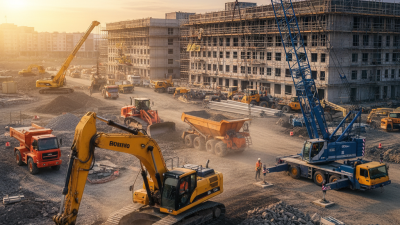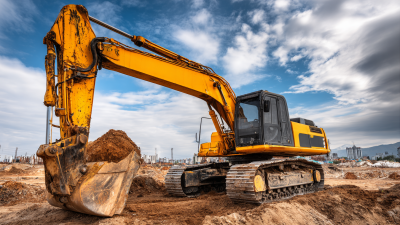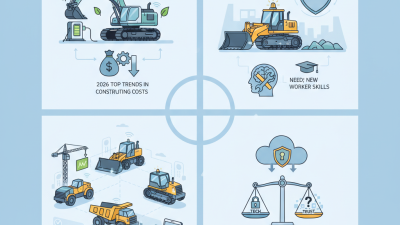
In 2026, heavy duty construction equipment is becoming more intelligent, efficient, and specialized. Excavators, bulldozers, wheel loaders, motor graders, cranes, and articulated dump trucks remain essential on demanding projects. Yet their value depends on more than engine power. Jobsite conditions, operating costs, attachment compatibility, operator skill, and maintenance access can change the final result.
Melker Jernberg, President of Volvo Construction Equipment, has stated, “We need to accelerate the transformation of our industry.” This transformation is visible in battery-electric machines, machine-control systems, remote monitoring, and lower-emission diesel technology. However, progress is not perfectly smooth. Electric equipment may struggle on remote sites without reliable charging. Digital systems can also create new training and maintenance challenges. These limitations deserve honest attention.
This guide examines the top heavy duty construction equipment types expected to shape the market in 2026. It connects practical field experience with current equipment development. Large excavators may dominate deep excavation, while dozers deliver controlled earthmoving and site preparation. Wheel loaders support fast material handling. Cranes provide lifting capacity where accuracy and stability matter most. Articulated trucks move heavy loads across uneven ground.
The strongest choice is rarely the largest machine. It is the machine that matches the work. A powerful excavator can still waste fuel when paired with the wrong bucket. A modern fleet can still underperform without dependable service support. Understanding these details helps contractors, fleet managers, and project planners make safer, more reliable decisions in changing construction environments.
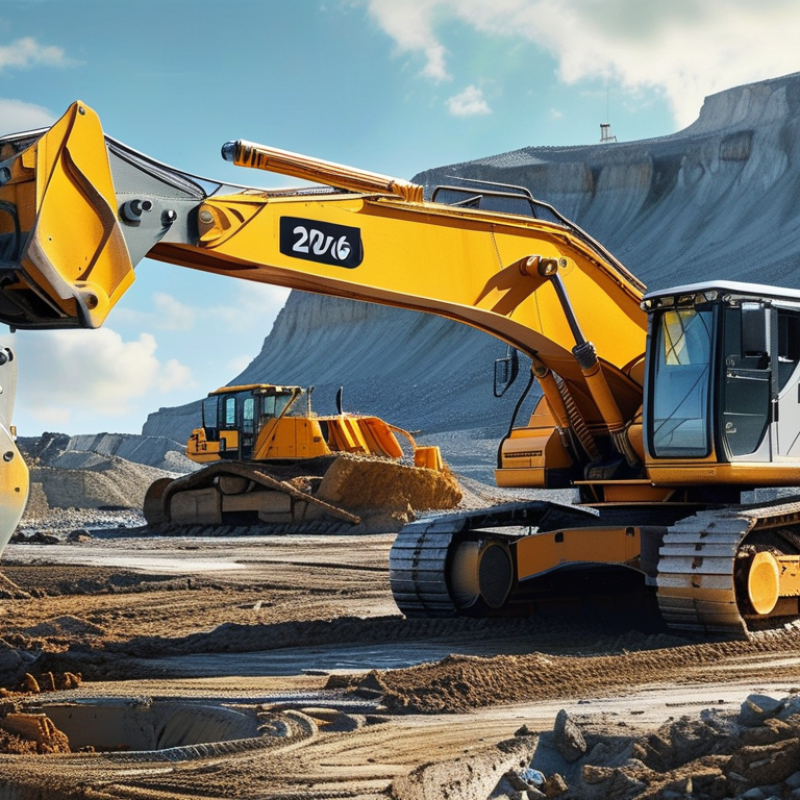
Heavy-duty construction equipment refers to powerful machines designed for demanding work, long operating hours, and difficult ground conditions. Common types include hydraulic excavators, bulldozers, wheel loaders, motor graders, dump trucks, and mobile cranes. Their size is not the only measure. Engine output, operating weight, hydraulic capacity, attachment compatibility, and stability also matter.
These machines support earthmoving, road building, mining, utility installation, and large-scale foundation work. Excavators dig trenches and load materials, while bulldozers spread soil and clear rough ground. Wheel loaders move aggregate efficiently across short distances. Motor graders create accurate slopes and smooth road surfaces. Dump trucks transport soil, rock, and construction debris between work zones. In practice, choosing equipment depends on soil type, access space, lifting requirements, fuel use, and operator skill. A larger machine may finish one task faster, yet it can waste fuel or damage weak ground. That detail is often overlooked.
Tips: Match the machine to the application, not just the project size. Check ground bearing pressure before delivery. Inspect hydraulic lines, tires, tracks, lights, and emergency controls daily. Keep a clear exclusion zone around lifting and reversing operations. Maintenance records also deserve attention; a missed inspection can become an expensive delay. Even experienced teams sometimes underestimate weather, visibility, and attachment wear. That deserves a second look.
Excavators, bulldozers, and wheel loaders remain essential for demanding earthmoving work. Excavators dig trenches, remove soil, and shape deep foundations with controlled hydraulic power. Their swing radius matters on crowded sites. A compact rear counterweight can prevent costly contact with nearby structures.
Bulldozers push, spread, and grade soil across wide working areas. Their heavy tracks provide useful stability on loose ground.
Wheel loaders move aggregates quickly between stockpiles, trucks, and processing zones. Their bucket size should match haul distance, material density, and loading height.
Tips: Check ground conditions before choosing equipment. Wet clay can reduce traction and increase cleanup time. Match attachments to the actual material. Inspect hydraulic hoses, cutting edges, tires, and track tension every shift. Small defects become expensive delays.
Operators should also measure fuel use, cycle time, and idle hours. These records support better equipment decisions than guesswork. Excavators often excel in confined digging areas, while bulldozers need room to build steady pushing lanes.
Wheel loaders may appear faster, but repeated long travel can reduce their advantage. I have seen projects overestimate bucket capacity and underestimate access limits. That mistake leaves machines waiting beside narrow haul roads.
Soil tests, site drawings, and operator feedback create a more reliable selection process. Sometimes, the best machine is not the largest one.
Cranes, forklifts, and telehandlers will remain central to heavy-duty construction in 2026. Off-Highway Research forecasts steady global demand for construction equipment through the decade, supported by infrastructure renewal and urban development. Cranes handle high-reach lifting, while forklifts move pallets across firm, prepared surfaces. Telehandlers add reach and mobility, especially on uneven building sites.
Match the machine to the load. A mobile crane needs stable ground, accurate outrigger placement, and a documented lift plan. Forklift operators must check load balance, mast visibility, and pedestrian separation. The U.S. Occupational Safety and Health Administration reports about 35,000 serious forklift injuries each year. That figure still feels easy to underestimate. One blind corner can change the entire workday.
Telehandlers require careful attention to attachment ratings and boom angle. Their rated capacity can fall sharply as the boom extends. The 2025 Global Construction Equipment Market analysis by Research and Markets identifies material handling and lifting applications as important growth areas. Yet market growth does not guarantee safe productivity. Field experience suggests that rushed attachment changes and poor ground assessment cause avoidable delays. Digital load indicators help, but they cannot replace trained judgment. Before selecting equipment, compare lift charts, site access, wind exposure, maintenance support, and operator visibility. The cheapest machine may become the slowest one.
| Equipment type | Primary lifting application | Typical rated capacity | Typical reach or lift height | Best operating environment | Key strengths | Important limitations |
|---|---|---|---|---|---|---|
| Mobile crane | Lifting structural steel, precast concrete, mechanical systems, and heavy site materials | Approximately 10–500 metric tonnes, depending on crane class and configuration | Boom lengths commonly range from about 20–100 m; maximum height varies with boom and jib configuration | Road-accessible construction sites, infrastructure projects, industrial plants, and large commercial developments | High lifting capacity, strong horizontal reach, and rapid relocation between prepared work areas | Requires ground assessment, outrigger setup, lift planning, exclusion zones, and adequate transport access |
| Crawler crane | Heavy lifts on major civil engineering, energy, bridge, and industrial projects | Approximately 40–3,000 metric tonnes across available classes | Boom systems commonly reach 30–120 m or more with optional jibs | Large prepared sites where the crane can remain assembled or be transported in modules | Excellent stability, high lifting capacity, and the ability to travel with a suspended load within approved limits | Slow mobilization, substantial transport requirements, and the need for strong, level ground |
| Tower crane | Vertical construction of high-rise buildings and large multi-story structures | Typically about 2–20 metric tonnes; capacity decreases as the load moves toward the jib tip | Common free-standing heights are about 30–80 m; greater heights are possible with building ties | Long-duration urban and commercial projects with a dedicated foundation or anchoring system | Large working radius, efficient repetitive lifting, and excellent service to multiple building levels | Fixed location, complex erection and dismantling, wind restrictions, and significant site-planning needs |
| Rough-terrain crane | Lifting materials on uneven, undeveloped, or off-road construction sites | Approximately 10–100 metric tonnes | Typical telescopic boom lengths are about 20–50 m | Civil works, utility construction, industrial maintenance, and remote or uneven terrain | Four-wheel steering, all-terrain mobility, and compact dimensions for restricted sites | Usually requires outriggers for rated lifts and is less suitable for long-distance road travel or very high lifts |
| Counterbalance forklift | Moving pallets, pipe, packaged materials, and building supplies across short distances | Common construction capacities are approximately 2–10 metric tonnes; specialized units can be higher | Typical mast lift heights are about 3–6 m; specialized masts can exceed this range | Warehouses, material yards, loading zones, and firm, relatively level construction surfaces | Compact turning radius, precise load placement, and efficient pallet handling | Limited ground clearance and reach; load capacity is affected by mast height, load center, and attachment choice |
| Rough-terrain forklift | Transporting palletized materials over unfinished ground and construction access routes | Approximately 2.5–10 metric tonnes | Typical lift heights are about 3–9 m, depending on mast design | Outdoor sites with loose soil, gravel, ramps, and moderate slopes | Large tires, high ground clearance, and improved traction compared with warehouse forklifts | Less maneuverable indoors and generally less suitable for high stacking or long-distance material transport |
| Telehandler | Placing pallets, roof materials, masonry, and attachments at height or over obstacles | Typically about 2.5–5 metric tonnes; capacity varies substantially with boom extension | Common maximum lift heights are approximately 6–18 m; compact and specialized units vary | General building sites, residential developments, agricultural construction, and uneven outdoor terrain | Combines forklift handling with forward reach; can use forks, buckets, work platforms, and lifting hooks | Rated capacity falls at greater reach; requires load charts, level positioning, and careful attachment control |
| Truck-mounted crane | Loading and unloading materials, placing small structural components, and servicing multiple locations | Approximately 1–30 metric tonnes, depending on the crane and truck configuration | Typical hydraulic boom reaches are about 8–30 m | Road-connected sites, delivery operations, utility work, and short-duration lifting tasks | Combines transport and lifting, reducing the need for separate delivery and handling equipment | Lower capacity and reach than major cranes; requires stable setup space and adequate outrigger deployment |
Graders, pavers, and rollers remain essential for reliable road construction in 2026.
Each machine controls a different stage of the pavement structure. A motor grader shapes the subgrade with its long, adjustable blade. Operators use small blade movements to create accurate slopes and drainage paths. On a windy site, dust can hide surface irregularities. Careful checking still matters.
The paver places asphalt at a controlled width, depth, and temperature.
Consistent feeding helps prevent segregation and weak seams. Crews should monitor the screed, material flow, and paving speed together. A slow paver can cool the mix before compaction begins. That mistake is easy to make. It is also expensive to correct.
Rollers then develop density through vibration, static pressure, or both.
Steel drums work well on smooth asphalt surfaces, while pneumatic rollers can improve particle contact. Operators must match rolling patterns to mix temperature and weather conditions. I have seen crews follow a fixed pattern too closely, even when the asphalt cooled faster than expected. The plan looked correct, but field conditions disagreed. Testing density during the shift provides stronger evidence than appearance alone. Clean drums, calibrated controls, and trained operators also reduce avoidable defects.
Choosing heavy-duty construction equipment in 2026 starts with project requirements, not machine popularity. Match bucket capacity to soil density, haul distance, and cycle time. A 30-ton excavator may dig faster, yet it can damage soft access roads. For urban sites, short-tail excavators reduce swing exposure. The 2024 AGC Workforce Survey found that 94% of contractors struggled to fill open positions. Simpler controls and clear operator displays therefore matter.
Capacity must fit the complete work cycle. A wheel loader should fill trucks without excessive idling. A dozer needs enough blade power for cut-and-fill volumes, but excessive weight increases ground pressure. The 2024 Global Construction Equipment Market Report projects continued market growth through the decade. That growth does not justify buying oversized equipment. Sometimes, smaller machines deliver better utilization.
Work conditions can change the decision. On steep ground, prioritize traction, braking systems, and low-center stability. On muddy sites, consider wider tracks or flotation tires. In dusty areas, sealed electrical systems and accessible filters reduce downtime. A crane needs verified ground bearing capacity before setup. A telehandler needs reach capacity at the actual load height, not the brochure maximum. These details are easy to miss. They should not be. Fuel use, transport permits, maintenance access, and trained operators also affect real productivity. My practical concern is simple: calculated capacity often looks precise, while soil, weather, and human judgment remain imperfect.