Top 10 Concreting Equipment for Global Buyers in 2026?

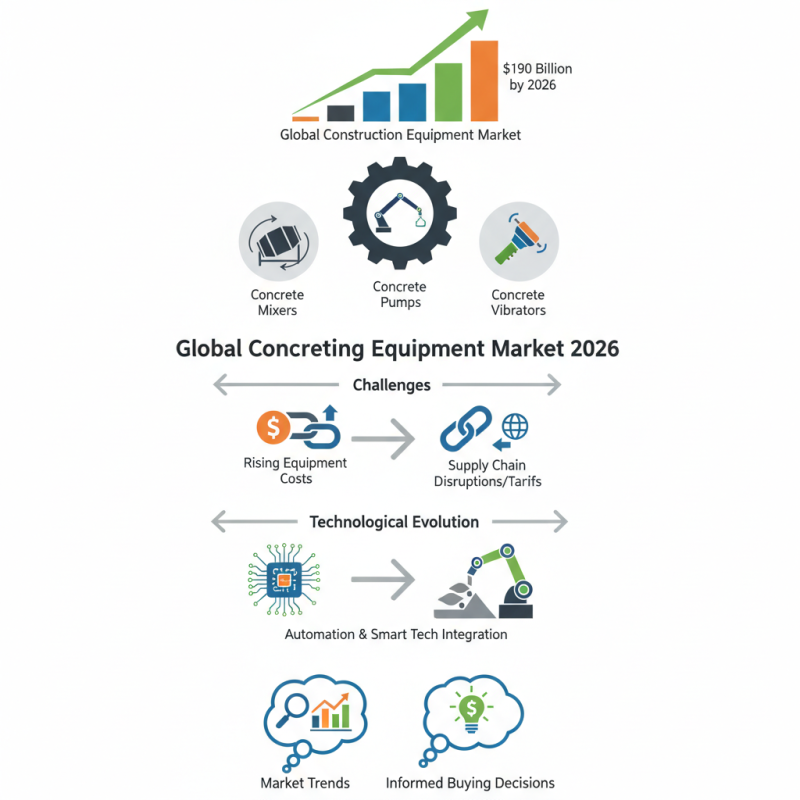
As the global construction industry continues to grow, the demand for advanced concreting equipment is rising. According to a report by Research and Markets, the global construction equipment market is expected to reach $190 billion by 2026. Concreting equipment plays a vital role in this expansion, emphasizing efficiency and innovation.

Among the various types of concreting equipment, concrete mixers, pumps, and vibrators stand out. These machines enhance productivity and ensure high-quality finishes in construction projects. However, the market also faces challenges. Equipment costs are rising due to tariffs and supply chain disruptions. Buyers need to consider these factors carefully.

The evolution of technology is reshaping the landscape of concreting equipment. Automation and smart technology integration offer exciting possibilities but require careful implementation. Industry players must balance innovation with investment to avoid overspending. Understanding the market trends and being informed is crucial for making sound buying decisions.
Top 10 Concreting Equipment for Global Buyers in 2026?

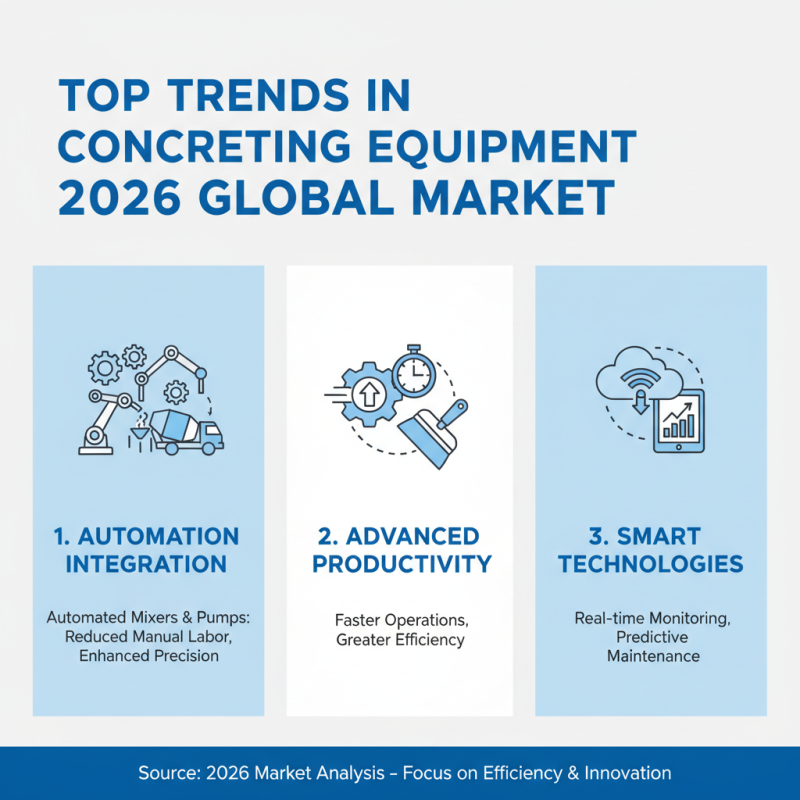
Top Trends in Concreting Equipment for 2026 Global Market
Top 10 Concreting Equipment for Global Buyers in 2026?

As we approach 2026, the concreting equipment market is evolving rapidly. Buyers are increasingly interested in advanced technologies that enhance productivity and efficiency. One notable trend is the integration of automation in equipment. Automated mixers and concrete pumps are gaining traction. These machines reduce manual labor and improve precision in applications.

Electric and hybrid machinery is on the rise. Environmental concerns drive this trend, making sustainable equipment more appealing. Buyers are looking for options that offer reduced emissions and lower energy consumption. The shift towards more eco-friendly practices can potentially reshape the entire industry.

Nevertheless, challenges remain. Adoption of new technology can be slow. Some operators may resist automation due to concerns about job security. Moreover, integrating new systems can lead to initial inefficiencies. Buyers need to weigh the long-term benefits against these short-term hurdles. Understanding these dynamics is crucial for making informed purchasing decisions in the coming years.
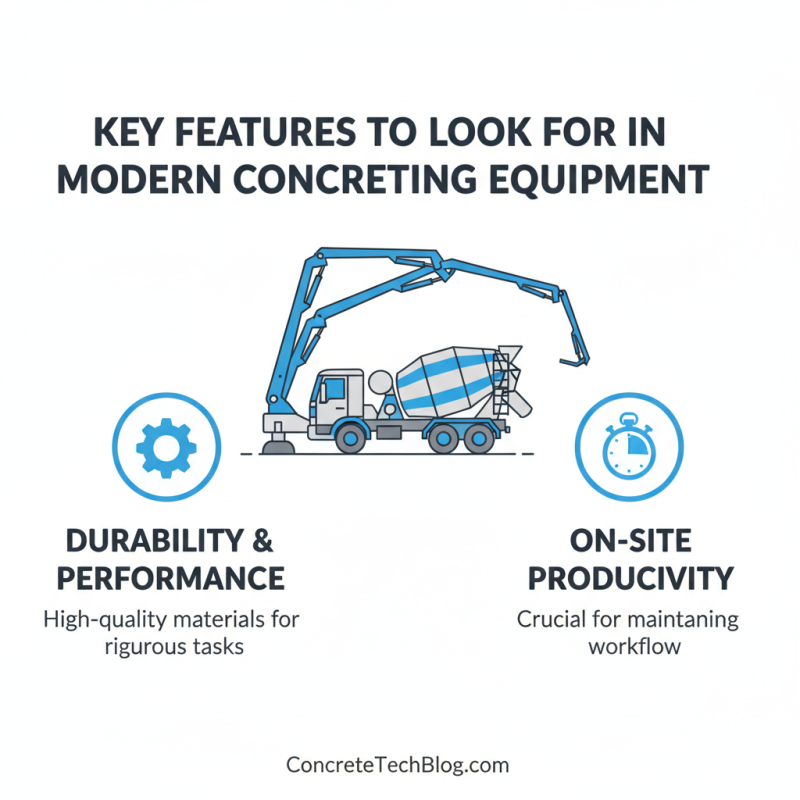
Key Features to Look for in Modern Concreting Equipment

Top 10 Concreting Equipment for Global Buyers in 2026?

When selecting modern concreting equipment, several key features are essential. Look for durability and performance. High-quality materials ensure that the equipment can withstand rigorous tasks. This is crucial for maintaining productivity on-site.

Technology integration has become increasingly important. Advanced features like GPS tracking and automated controls enhance efficiency. Such elements can streamline workflows and minimize human error. However, not all systems are user-friendly. Some may require extensive training.

Portability and ease of use are also critical considerations. Equipment should be lightweight yet robust enough for various applications. This balance can prevent accidents and improve site mobility. Remember, investing in the right tools affects overall project success. Observing user experiences can provide valuable insights into potential challenges with specific models.

Sustainability in Concreting Equipment: Innovations and Practices

Sustainability in concreting equipment will take center stage in 2026. As the construction industry evolves, there is a noticeable shift towards eco-friendly practices. Companies are adopting greener materials and innovative technologies. This commitment offers significant benefits in reducing carbon footprints.

One emerging practice involves utilizing recycled materials in concrete mixtures. By incorporating waste products, the industry can minimize reliance on virgin resources. Water management is another critical aspect. Efficient water usage systems are being developed to reduce water wastage during production. Advanced machinery is also being designed to run on renewable energy sources, lowering overall emissions.

Despite these advancements, challenges persist. Many operators face limitations in transitioning to greener practices. Additionally, initial costs for sustainable equipment can be high. However, the long-term advantages often outweigh these obstacles. Continued innovation and industry commitment will play vital roles in overcoming these hurdles.

Market Analysis: Leading Brands in the Concreting Equipment Sector

The concreting equipment sector is evolving rapidly. Recent reports indicate a projected growth rate of around 5.8% from 2021 to 2026. This surge is driven by increasing urbanization and infrastructure development globally. Countries in Asia-Pacific show promising demand, particularly in construction and repair projects.

Leading brands are continuously innovating their equipment to improve efficiency and reduce environmental impact. Many manufacturers now focus on integrating smart technology into their machines. This transition aims to enhance productivity while minimizing resource consumption. While advancements are notable, the industry faces challenges such as supply chain disruptions and fluctuating material costs.

Data from industry reports reveal that nearly 40% of buyers prioritize equipment durability and serviceability. These factors are critical in decision-making. However, many companies still struggle with customer service and after-sales support. Addressing these gaps can significantly boost brand loyalty and market positioning.

Future Technologies Shaping the Concreting Equipment Landscape in 2026

In 2026, advancements in concreting equipment are expected to be transformative. Technologies like automation and AI are set to revolutionize the industry. For instance, a recent study by Global Market Insights estimates that the market for automated concreting solutions will reach $2 billion by 2026, reflecting a growing demand. These innovations enhance efficiency and accuracy, minimizing human error in construction projects.

Another area of growth is sustainable concreting technologies. The global push for eco-friendly practices is influencing equipment design. Reports indicate that 30% of the market will likely focus on sustainable options by 2026. This shift aims to reduce carbon footprints. Equipment that utilizes alternative materials, like recycled aggregates, will gain traction among buyers seeking compliance and environmental responsibility.

Yet, the transition to these technologies poses challenges. High initial costs can deter some buyers. Training workers on new systems is another hurdle. Industry leaders must focus on addressing these gaps to fully leverage the benefits of advanced equipment. They need to consider both immediate needs and future sustainability goals. While the future looks promising, the path forward requires careful planning and adaptation.

Top 10 Concreting Equipment for Global Buyers in 2026

Equipment Type Key Features Market Demand Estimated Price Range Trends Impacting Future
Concrete Mixers Portable, Electric, Diesel options High $1,500 - $7,000 Sustainability, Automation
Concrete Pumps Boom, Line types available Medium $30,000 - $100,000 Technological Enhancements
Concrete Vibrators Electric, Pneumatic options High $100 - $1,500 Noise Reduction, Efficiency
Concrete Finishing Machines Ride-on, Walk-behind types Medium $5,000 - $20,000 Automation, Precision Engineering
Concrete Saws Electric, Gas, or Diesel powered Low to Medium $500 - $3,000 Tech Integration, Safety Features
Concrete Batch Plants Mobile and Stationary types High $30,000 - $300,000 Demand for Smart Plants
Concrete Trucks Mixer, Pump integration Medium $35,000 - $150,000 Electric Options, Sustainability
Concrete Compression Testing Machines Digital, Manual types Medium $2,000 - $10,000 Automation, Data Collection
Safety Equipment Helmets, Safety Harnesses High $50 - $500 Regulatory Compliance
Concrete Testing Kits Field Test Kits Medium $100 - $1,000 Portable, Easy-to-use