Top 10 Essential Casting Components Every Buyer Should Know?
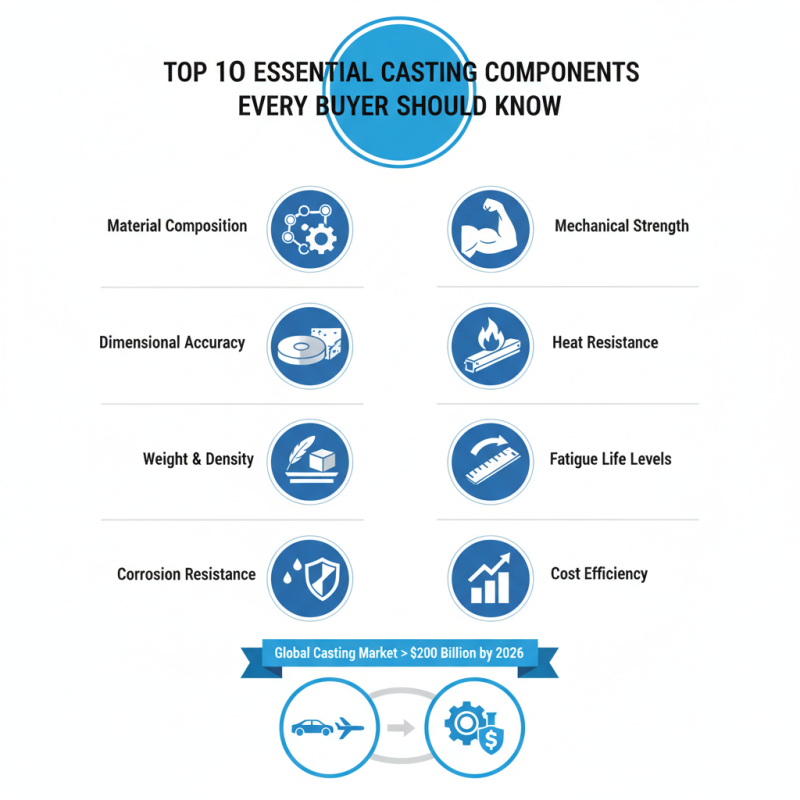
In the manufacturing industry, understanding essential Casting Components is critical for success. A recent market analysis indicates the global casting market is expected to surpass $200 billion by 2026. This figure underscores the importance of high-quality casting components. With advancements in technology and material science, buyers must be well-informed when selecting components for their projects.
Casting components play a vital role in ensuring product durability and performance. According to a report by Global Industry Analysts, the demand for aluminum and polymer casting components is rising significantly. This trend reflects the need for lightweight and corrosion-resistant materials in various applications, from automotive to aerospace. Yet, many buyers often overlook specific features that can impact functionality.
Navigating the complexity of casting components requires expert knowledge. Each component has unique characteristics that can affect the overall production process. As buyers, it’s essential to explore the hidden costs associated with inferior components. Investing in quality casting components can ultimately lead to better long-term returns.
Key Casting Material Types and Their Applications
When selecting casting materials, understanding the types and their applications is crucial. The most common materials include aluminum, iron, and magnesium. Each type has unique properties that suit various needs. For instance, aluminum is lightweight and resistant to corrosion. It's ideal for automotive and aerospace applications. Reports suggest that the global aluminum casting market is expected to reach $21 billion by 2025, reflecting its rising demand.
Iron casting remains popular due to its strength and durability. Cast iron is especially effective in manufacturing heavy machinery components. It offers excellent wear resistance, making it essential in industrial sectors. Interestingly, a recent industry analysis indicated a projected growth rate of 4.5% in the iron casting market over the next five years. This data underlines iron's enduring relevance despite the rise of newer materials.
Magnesium casting has emerged as a favorite in high-performance applications. Its exceptional strength-to-weight ratio makes it a top choice in the aerospace industry. However, it also presents challenges, such as susceptibility to corrosion. The complexity of working with magnesium should not be underestimated, as improper handling can lead to structural failures. Understanding these nuances is vital for any buyer in this field.
Essential Tools for the Casting Process
The casting process relies heavily on essential tools that shape the end products. A study from the American Foundry Society indicates that nearly 70% of casting defects arise from inadequate tooling. This highlights the importance of precise and reliable tools.
Molds are fundamental in casting. They determine the form and intricacies of the casted items. Proper mold materials, like sand or metal, affect durability and precision. High-quality molds can enhance output quality, reducing errors and waste by up to 30%.
Another crucial component is the melting furnace. Accurate temperature control is vital for ensuring uniform melting of materials. Reports show that inconsistent melting can lead to structural weaknesses. Effective temperature management improves material properties and overall reliability. Achieving consistent results requires ongoing assessment and adjustments, which can deter efficiency if overlooked.
Understanding Molds: Types and Selection Criteria
When it comes to understanding molds in casting, selecting the right type is crucial. Different molds affect the quality and efficiency of the casting process. Common types include sand molds, investment molds, and die-casting molds. Each offers unique advantages. For example, sand molds are flexible and economical, while investment molds provide high precision. However, adapting to specific requirements can be challenging.
Tips: Always consider the material you plan to cast. Some molds suit certain metals better than others. Evaluate your project needs carefully. Simple choices can significantly impact the final product.
Moreover, pay attention to the mold design. Complexity can introduce risks and increase production time. Opt for designs that maintain essential details without being overly intricate. A mold that is overly complex may lead to defects. This can require rework, adding both cost and time.
Tips: Regularly review your mold designs. Feedback from production can highlight potential issues. Stay open to adjustments. The right mold is key to a successful casting operation.
Top 10 Essential Casting Components Every Buyer Should Know
Importance of Alloy Composition in Casting Quality
Alloy composition plays a critical role in casting quality. The right mix of elements influences strength, durability, and resistance to corrosion. According to the "Annual Global Casting Report", improper alloying can reduce tensile strength by up to 30%. This degradation not only affects the performance of the final product but might lead to failures in demanding applications.
Moreover, specific alloys are tailored for different applications. For example, aluminum alloys are often chosen for their lightweight and excellent corrosion resistance. They typically contain up to 12% alloying elements. This careful balance enhances their mechanical properties, making them ideal for aerospace and automotive sectors. However, not all manufacturers fully understand these compositions. Reports indicate that nearly 25% of defects in casting come from inadequate knowledge of alloying.
Deciding on alloy composition cannot be taken lightly. Regular testing and quality analysis are essential to maintain standards. The "Casting Quality Symposium" cites that over 40% of quality issues stem from inconsistent alloying processes. Buyers must engage with experienced professionals to ensure the right choices are made. An informed decision can significantly impact longevity and performance.
Inspecting Cast Components: Quality Control Techniques
Quality control in cast components is crucial. The first step involves visual inspection. Inspectors look for surface defects like cracks and voids. Even minor imperfections can lead to significant failure later on. Thorough visual checks save time and resources.
Next, dimensional checks come into play. Precision is key in casting. Using calipers and gauges, inspectors ensure components match specifications. Deviations, even tiny ones, can affect performance. This step often uncovers issues early in the production cycle.
Lastly, non-destructive testing techniques are essential. Methods like ultrasonic testing help reveal internal flaws without damaging parts. Regular use of these techniques builds reliability. However, it requires skilled technicians. Training and experience are vital for accurate results. Continuous improvement in quality control measures enhances component durability. Effective quality management is not a one-time task; it requires ongoing reflection and adjustments.
Top 10 Essential Casting Components Every Buyer Should Know
| Component Name | Material Type | Common Applications | Quality Control Techniques |
| Housing | Aluminum | Automotive, Electronics | Visual Inspection, Dimensional Check |
| Brackets | Steel | Industrial Machinery | Non-Destructive Testing, Surface Roughness Measurement |
| Engine Block | Cast Iron | Automotive | X-Ray Inspection, Ultrasonic Testing |
| Pipes | Ductile Iron | Construction, Water Supply | Hydrostatic Testing, Leak Testing |
| Gearbox Housing | Aluminum Alloy | Automotive, Aerospace | Magnetic Particle Inspection, Tension Testing |
| Valve Bodies | Bronze | Pipelines, Industrial | Thickness Measurement, Surface Crack Detection |
| Frame | Steel | Automotive, Heavy Machinery | Dimensional Checks, Load Testing |
| Base Plates | Carbon Steel | Construction, Machinery | Visual Inspection, Hardness Testing |
| Mounting Blocks | Aluminum | Aerospace, Automotive | Vibration Testing, Visual Inspection |
| Channels | Stainless Steel | Food Processing, Pharmaceuticals | Surface Roughness Measurement, X-Ray Inspection |