Why Invest in a Fuel Cell Hydrogen Station?
Investing in a Fuel Cell Hydrogen Station requires more than enthusiasm for clean transport. It requires evidence, patience, and a clear local demand model. The International Energy Agency’s Global Hydrogen Review 2024 reported global hydrogen demand near 100 million tonnes in 2023. However, low-emissions hydrogen still represented less than one percent of production. That gap creates opportunity, but it also exposes investment risk.
Dr. Sunita Satyapal, director of the U.S. Department of Energy’s Hydrogen and Fuel Cell Technologies Office, states, “Hydrogen is an energy carrier, not an energy source.” Her point matters at every station gate. Hydrogen production, compression, delivery, and dispensing all affect emissions and operating costs. A practical station may include 700-bar dispensers, high-pressure storage tanks, cooling equipment, and backup systems. Drivers notice the details. They notice a short queue, a clear display, and reliable fueling.
The IEA has reported more than 1,000 publicly accessible hydrogen refueling stations worldwide. Yet station utilization remains uneven across regions. A busy logistics corridor can support daily truck demand. A poorly positioned site may become an expensive steel structure beside an empty road. The business case is not perfect. Electricity prices change, supply contracts can fail, and vehicle adoption may move slowly. Investors should therefore study fleet commitments, local hydrogen availability, maintenance capacity, and five-year utilization scenarios. A Fuel Cell Hydrogen Station can strengthen zero-emission mobility, but only when infrastructure follows real traffic rather than optimistic forecasts. The numbers deserve another review.
What Is a Fuel Cell Hydrogen Station?
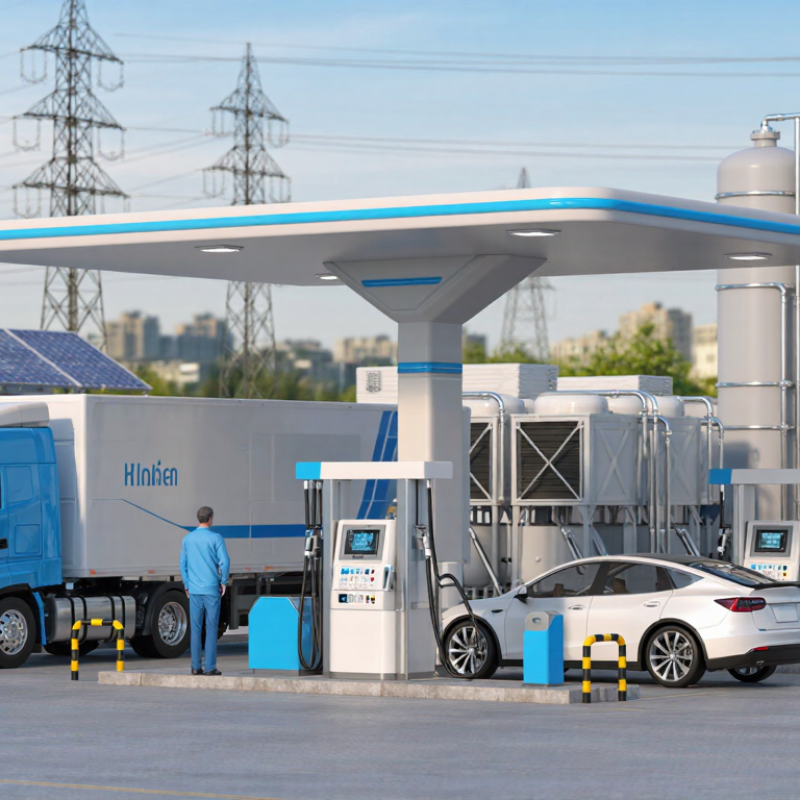
A fuel cell hydrogen station is a specialized facility for refueling hydrogen-powered vehicles. It receives hydrogen, stores it in reinforced tanks, and compresses it for vehicle use. A dispenser then transfers the gas through a sealed connection. The process usually takes only a few minutes.
Inside the vehicle, hydrogen enters a fuel cell system. The cell combines hydrogen with oxygen from the air to produce electricity, water, and heat. The station itself needs pressure controls, leak sensors, ventilation, grounding, and emergency shutoff systems. Trained technicians inspect these parts regularly. A clean layout also matters, because drivers may need clear instructions during busy periods.
It is not a perfect system. Equipment costs can be high, and hydrogen supply may vary by location. Still, reliable stations can support longer-distance transport and reduce refueling delays. Investment decisions should examine local demand, delivery access, maintenance skills, and applicable safety standards. Real operating data is more useful than optimistic projections.
Tips: Check storage capacity, dispenser uptime, inspection records, and emergency procedures before investing. Ask who maintains the station after installation. Small details matter.
How Does a Fuel Cell Hydrogen Station Operate?
A fuel cell hydrogen station begins with hydrogen supply, electricity, and carefully controlled pressure. Hydrogen may arrive by tube trailer or through on-site electrolysis. In electrolysis, electricity separates water into hydrogen and oxygen. The hydrogen then passes through purification equipment before storage.
Compression changes the station’s working rhythm. Hydrogen moves through several pressure stages, often reaching high pressure for vehicle refueling. Storage tanks hold the gas until a vehicle arrives. During dispensing, sensors check pressure, temperature, and connection status. A cooling system may lower hydrogen temperature because rapid filling creates heat. The nozzle locks to the vehicle before gas flows. Small details matter here.
Inside the vehicle, hydrogen enters a fuel cell stack. Hydrogen molecules release electrons at the anode. Those electrons travel through an external circuit and create electricity. At the cathode, oxygen combines with protons and electrons. The main byproducts are water and heat. Refueling can be quick, but station performance depends on supply timing, equipment condition, and local demand. A poorly calibrated sensor can interrupt service without warning. Operators therefore inspect seals, valves, filters, grounding, and emergency controls regularly. The process looks simple from outside, yet pressure management leaves little room for casual maintenance. This operational discipline is central when evaluating an investment, because uptime often matters as much as the equipment itself.
What Market Needs Support Investment in Hydrogen Stations?
Why Invest in a Fuel Cell Hydrogen Station?
The strongest market need comes from fleets that cannot tolerate long charging stops. City buses, delivery trucks, taxis, and port vehicles often follow fixed routes. A hydrogen station can refuel several vehicles within a planned operating window. This matters when one vehicle works two shifts daily. Demand is more predictable when fleet managers sign long-term fuel agreements. Industrial sites may also need hydrogen for backup power or material-handling equipment. These users create steady traffic, unlike occasional private drivers.
Investment still requires careful local research. A station near a logistics corridor may outperform one in a low-traffic area. Operators should study vehicle numbers, route lengths, refueling pressure, land access, and hydrogen delivery options. Safety training and routine inspections are essential. So are permits and emergency procedures. The business case is not always elegant. High equipment costs can weaken returns during the early years. Underused capacity remains an uncomfortable risk. Reliable data should guide the investment, not optimism alone.
Tips: Start with an anchor fleet. Measure daily fuel demand before sizing equipment. Confirm hydrogen supply contracts and delivery schedules. Design space for future expansion. Keep backup plans for supply interruptions. Review actual utilization every month. Small errors in demand forecasts can become expensive.
Hydrogen already has a large industrial customer base, with approximately 97 million tonnes of global demand in 2023. Refining, ammonia and methanol represented the largest established uses, while direct reduced iron and other emerging applications indicate potential growth for low-emission hydrogen. Fuel-cell station investment is strongest when positioned near industrial hubs, logistics corridors and regions where clean mobility demand is expanding.
Source: International Energy Agency, Global Hydrogen Review 2024. Figures are rounded estimates.
What Economic and Environmental Benefits Can Investors Expect?
A fuel cell hydrogen station can create revenue beyond fuel sales. It may serve buses, trucks, taxis, and fleet vehicles with predictable daily demand. The International Energy Agency reported global hydrogen demand reached about 97 million tonnes in 2023. Yet low-emissions hydrogen remained below 1% of production. This gap signals opportunity, but it also exposes supply risks. Investors should secure reliable hydrogen contracts before construction begins.
Environmental value depends on the hydrogen source. Fuel cell vehicles produce water at the tailpipe, with no direct carbon dioxide emissions. However, the IEA estimates hydrogen production creates roughly 900 million tonnes of carbon dioxide annually. Renewable or low-carbon hydrogen can therefore improve a station’s climate impact significantly. Electricity use still matters. A station operating beside a clean power supply may reduce emissions more effectively than one relying on carbon-intensive hydrogen.
Revenue can be strong when utilization is high. Underused dispensers, compressors, and storage equipment quickly weaken returns. The U.S. Department of Energy identifies equipment cost, station capacity, and utilization as major cost drivers in hydrogen infrastructure analysis. Investors should test several demand scenarios, including delayed fleet adoption. That uncomfortable case matters. Safety systems, trained technicians, permitting, and frequent maintenance also require long-term funding. Industry forecasts suggest rapid growth, but forecasts are not guarantees. Real-world traffic may arrive slowly.