10 Essential Tips to Learn to Operate Heavy Equipment Effectively
In today’s construction and industrial sectors, the demand for skilled operators of heavy equipment is growing rapidly. According to a report by the Associated General Contractors of America, nearly 80% of contractors are struggling to find qualified workers. This gap highlights the importance of proper training. To effectively learn to operate heavy equipment, one must invest time in both theoretical knowledge and hands-on practice.
Moreover, safety remains a top concern in operating heavy machinery. The Occupational Safety and Health Administration (OSHA) notes that improper operation can lead to severe accidents. Training programs must address these risks head-on. Understanding the equipment is not just about machinery; it includes safety protocols and maintenance practices.
Learning to operate heavy equipment is a journey filled with challenges. Individuals often face steep learning curves, and mistakes can happen during training. Reflecting on these experiences can lead to better skills in the long run. Ultimately, effective operation is not just about knowing how to use the equipment; it's about developing a mindset for safety and efficiency.

The Importance of Heavy Equipment Training and Certification Standards
Heavy equipment training is crucial for safety and efficiency in the construction industry. According to the Occupational Safety and Health Administration (OSHA), improper handling of heavy machinery accounts for over 10% of workplace fatalities. This underscores the need for proper training and certification. A well-structured training program can significantly reduce accidents and injuries. Research indicates that companies with certified operators see up to 30% fewer accidents on site.
Certification standards ensure that operators possess the necessary skills and knowledge. For example, the National Commission for the Certification of Crane Operators (NCCCO) has established a benchmark that operators must meet. This includes knowledge of machine operation, safety protocols, and emergency procedures. Yet, many individuals fail to recognize the importance of ongoing education. A one-time certification may not cover all advancements in technology and safety practices.
Investing in continuous training can enhance skills and keep operators updated. It helps in adapting to new equipment or regulations. Sadly, many workers overlook these opportunities. They often believe their existing skills are sufficient. However, this complacency might lead to oversights that jeopardize safety. Regular assessments and refresher courses can bridge this knowledge gap, making a real difference in workplace safety.
Understanding Different Types of Heavy Equipment and Their Functions
Heavy equipment plays a crucial role in
construction and mining industries. Understanding the different
types helps operators perform their tasks effectively. For instance,
excavators are essential for digging and moving large amounts of earth.
They can have a bucket capacity of up to 5 cubic meters, making them
invaluable for large-scale projects. Reports indicate that improper use can lead to a
25% increase in operational costs due to
inefficiencies.
Another critical machine is the
bulldozer. These powerful machines have tracks instead of wheels,
allowing them to navigate rough terrains. Their blades can push vast quantities of material, but they
require careful handling. Misjudging terrain or load can result in accidents, highlighting the need for
thorough training. The National Institute for Occupational Safety and Health
reports that heavy equipment accidents account for a significant percentage of workplace injuries.
Cranes are indispensable for lifting heavy loads to great heights.
Operators must understand weight distribution and load limits. A small mistake can lead to
catastrophic failures. Training programs
emphasize the importance of safety standards. Learning the distinct functions of each equipment type is
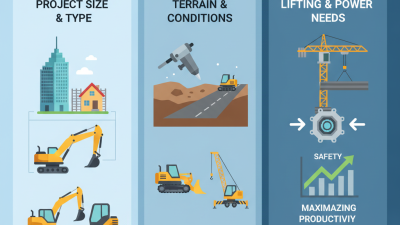
not just about operation; it’s about ensuring a safe work environment and maximizing productivity.
Engaging in continual education and practical experience can significantly enhance skills in
heavy equipment operation.
Key Safety Practices to Implement While Operating Heavy Machinery
Operating heavy machinery safely is crucial. According to the Bureau of Labor Statistics, about 90,000 injuries occur each year due to machinery accidents. This highlights the need for strict safety practices. Always conduct a pre-operation inspection. Check for leaks, and ensure all components are functioning. Missing these steps can lead to dangerous situations.
Proper training is essential. Many accidents happen due to operator errors. Data reveals that untrained operators are at a significantly higher risk. Familiarize yourself with the equipment’s controls and limitations. Use seat belts and protective gear consistently. It's alarming how many operators neglect basic safety instructions.
Maintaining a clean work environment is vital. Tools should be stored properly to avoid tripping hazards. The OSHA reports that a significant number of accidents stem from cluttered workspaces. Lastly, always communicate clearly with your team. Misunderstandings can lead to accidents. Make it a habit to signal before starting equipment. Each of these practices helps reduce risk and promotes a safer operation environment.
Heavy Equipment Operation Safety Practices Effectiveness
Common Operator Mistakes and How to Avoid Them
Operating heavy equipment requires skill and caution. Operators often make common mistakes that can lead to accidents. One frequent error is failure to perform proper inspections. Before starting any machine, check for leaks or worn parts. Neglecting these checks can result in costly breakdowns.
Another common mistake is improper training. Many operators assume they can learn on the job. This can lead to poor practices and unsafe situations. Taking the time to learn from experienced trainers is crucial. They can provide insights that aren’t always obvious.
Tip: Always stay aware of your surroundings. It’s easy to focus solely on the machine. However, distractions can be dangerous. Maintain communication with other workers nearby. This can help prevent unexpected collisions. Operators should also avoid rushing their work. Speed can lead to mistakes. Slow down and ensure every task is completed correctly.
10 Essential Tips to Learn to Operate Heavy Equipment Effectively - Common Operator Mistakes and How to Avoid Them
| Tip Number |
Essential Tip |
Common Mistake |
How to Avoid Mistake |
| 1 |
Get Proper Training |
Operating without certification |
Enroll in accredited training programs |
| 2 |
Conduct Pre-Operational Checks |
Ignoring equipment inspection |
Follow a daily checklist before operation |
| 3 |
Understand Equipment Controls |
Misusing controls |
Familiarize yourself by reading the manual |
| 4 |
Communicate with Ground Personnel |
Not using signals |
Establish clear hand signals and radios |
| 5 |
Balance Load Properly |
Overloading the equipment |
Know the weight limits and load accordingly |
| 6 |
Maintain a Safe Distance |
Getting too close to the edge |
Use safety barriers and maintain clear zones |
| 7 |
Be Aware of Surroundings |
Not noticing hazards |
Always scan the area before moving |
| 8 |
Use Appropriate Gear |
Wearing improper footwear |
Wear safety boots with good grip |
| 9 |
Follow Safety Protocols |
Skipping safety checks |
Observe all safety procedures and practices |
| 10 |
Continuous Learning |
Staying stagnant in skills |
Seek out additional training regularly |
Best Resources for Continuous Learning and Skill Improvement in Operation
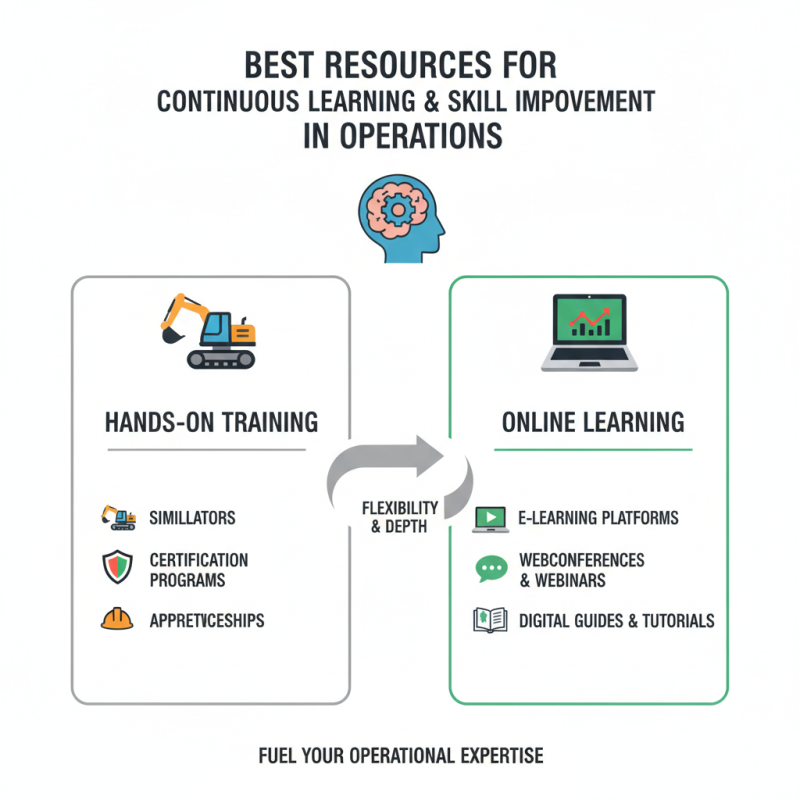
Learning to operate heavy equipment is a valuable skill, but it requires continuous learning. It's crucial to seek out resources that promote ongoing education. Many training programs offer hands-on experience to help you understand machinery better. Online courses can also provide flexibility for busy schedules.
One essential tip is to practice as much as possible. The more time you spend behind the controls, the easier it becomes to master them. Dive into simulations if you can. They offer a risk-free environment to hone your skills. Video tutorials can be beneficial, too. Watching experts can clarify tricky maneuvers.
Engage with your peers for shared insights. Discussing experiences can reveal mistakes to avoid. Join forums to ask questions. Feedback is invaluable for growth. Equipment operation has its challenges, and reflecting on each experience helps in improvement. Continuous learning is a journey, not a destination.