How to Choose an Outdoor Garden Buddha Statue
Choosing an Outdoor Garden Buddha Statue is not only a matter of style. The statue must suit its setting, withstand local weather, and feel balanced beside plants, paths, and seating. A small stone figure can disappear behind broad hosta leaves; a tall one may dominate a narrow courtyard. Scale matters.
The National Gardening Association’s 2023 National Gardening Survey estimated that 80% of U.S. households took part in lawn and garden activities in 2022. That figure describes gardening broadly, not demand for Buddha statues. Still, it shows how many people shape outdoor spaces at home. The report offers useful context, but it cannot tell you which material will last in your climate.
Landscape architect Thomas D. Church described the garden as “a kind of outdoor room,” a principle that helps when placing a focal statue. Treat the figure as part of that room: check sightlines from the doorway, leave breathing space around it, and consider whether rain, frost, or strong sun may affect its finish. Materials matter. So does a stable base.
This guide will compare stone, resin, and metal, then cover size, placement, care, and respectful design choices. Look closely at drainage and surface texture; photographs can hide rough edges or uneven coloring. One point deserves reflection: a statue can look peaceful online and feel out of place in your garden. A tape measure and a quick site visit may prevent that mistake.
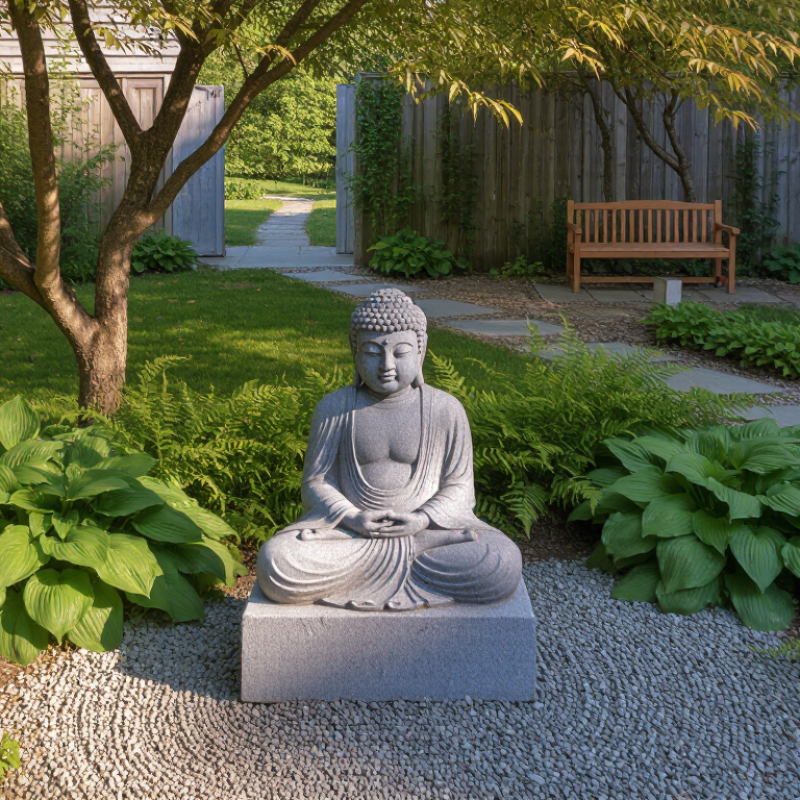
Identify the Purpose and Meaning of the Garden Buddha Statue
Before choosing a garden Buddha statue, decide what you want it to represent. It might mark a quiet place for reflection, suggest calm, or honor a spiritual tradition meaningful to your household. The statue’s posture and hand gestures can carry different meanings, so check reliable cultural or religious sources rather than assuming every figure symbolizes the same thing. Small details matter.
Think about how the statue will fit into your garden’s daily life. A seated figure beneath a leafy tree may create a peaceful pause, while a standing figure beside a path can feel welcoming. Consider who will see it and whether its placement feels respectful, not merely decorative. I once found a statue’s expression looked serene in a shop but seemed stern beneath my garden’s low branches. Light changes the mood. So does distance. Choose a setting where the figure can be approached without crowding plants or walkways. Your interpretation may not be perfect, and that is worth reflecting on. Read, observe, and choose with care.
Compare Materials for Weather Resistance and Longevity
Choose a statue by the weather it will face, not just its color. Granite and other dense stone resist rain and sunlight, but a heavy statue can still crack if water freezes inside a hairline fissure. Cast concrete offers a classic, textured finish, yet its pores can absorb moisture. ASTM C666/C666M evaluates concrete’s freeze-thaw durability through as many as 300 cycles. Ask for test results tied to the actual material, not a general “weatherproof” claim. NOAA’s 1991–2020 U.S. Climate Normals provide local temperature and precipitation records; check your area’s winter lows and rainfall before buying.
Resin is lighter and easier to move, but prolonged sun can fade or weaken some formulations. Metal lasts well when its coating stays intact; inspect joints and the statue’s base, where water may collect. Small details matter. A sheltered porch and an exposed, windy patio are not the same test, even for identical statues.
Tips: Check the base. Look for drainage, sealed seams, and clear care instructions. In freeze-prone areas, raise the statue slightly on a stable, level pad and keep its feet out of standing water. A cover helps, though I would not assume it solves every moisture problem.
Choose a Statue Size and Style for the Garden
A garden Buddha statue should feel connected to its surroundings, not simply fill an empty corner. Measure the planting area and nearby paths before choosing a size. A compact statue can suit a balcony or narrow border, while a larger one needs open space around it. Keep the setting breathable. Leave enough room for plants to grow and for people to pass without brushing against the statue.
Check how the statue looks from the places where you usually sit or walk. A piece that seems modest up close may disappear beneath a tall tree; one that looks right in a shop can feel oddly dominant at home. I still find scale easy to misjudge. A simple cardboard outline placed in the garden can help you compare its height and width before buying.
Style matters as much as size. A seated figure with smooth lines may feel calm among ferns, stones, and soft ground cover. A more detailed statue can work in a tidy courtyard where its features remain visible. Consider the existing colors and textures, too: pale stone may stand out against dark foliage, while a weathered finish can blend into a natural setting. Choose a style you can live with through changing seasons, not only one that looks striking on delivery day.
Select a Suitable Location and Stable Placement
Place the Buddha statue where it feels intentional, but where people will not brush against it. A sheltered corner near a path can offer a clear view without blocking movement. Check the spot after rain. Puddles, soft soil, and exposed roots can shift a heavy base over time. The USDA NRCS Web Soil Survey provides mapped soil and drainage information; treat it as a planning aid, not a substitute for checking the actual ground.
Set the statue on a firm, level surface, such as a compacted gravel bed or a properly sized stone pad. Keep the base fully supported, with no rocking at the corners. NOAA’s Storm Prediction Center uses gusts of 58 mph (50 knots) as the severe-thunderstorm wind threshold. That is a useful reminder to consider local exposure, especially in open yards. For a tall or narrow statue, follow the maker’s anchoring guidance and avoid improvised drilling into stone. I have seen careful placement undone by a base that looked level when dry but settled after a storm. Recheck it seasonally. Could be wiser.
Plan for Seasonal Care and Long-Term Maintenance
Seasonal care begins before the statue is installed. Choose a level spot with firm drainage, away from roof runoff and sprinklers. Standing water can stain stone and worsen freeze-thaw damage. Keep it stable. On soft soil, a compacted gravel base helps limit tilting after heavy rain.
Check the material before choosing a cleaning method; natural stone, cast concrete, and resin do not age alike. Use a soft brush and clean water for routine dust, then let the surface dry fully. Avoid pressure washing, abrasive pads, and acidic cleaners unless the maker specifically approves them. Harsh scrubbing seems efficient, but it can remove a finish or leave pale marks. Test first.
Before winter, remove leaves from creases and inspect the base for cracks or movement. In freezing climates, follow material-specific care guidance; porous pieces may need shelter or a breathable cover, while plastic can trap moisture against the surface. After storms, look for loosened joints, chipped edges, and water pooling around the feet. It is easy to overlook a hairline crack until frost makes it worse, so note changes each season, even small ones.