
China’s pallet truck industry serves warehouses, factories, and distribution centers where equipment faces dust, moisture, oil, and repeated movement. Pallet Truck Seals help protect hydraulic components from leakage and contamination. Their dimensions, elastomer type, hardness, and operating temperature can affect service life. Small differences matter. A seal that looks correct on a workbench may still fail after installation if its groove, pressure range, or shaft condition is unsuitable. There is no universal seal for every truck.
For buyers comparing Chinese manufacturers and suppliers, useful questions go beyond price. Can the supplier confirm drawings and tolerances? Are material options and inspection methods clearly documented? Can samples be checked against the actual pallet truck model before a larger order? These details help reduce avoidable fit problems. They also make supplier claims easier to assess. Experienced manufacturers may support custom profiles, but customization should follow measured requirements, not guesswork. That distinction is important.
This guide explores how to evaluate product quality, technical support, production consistency, and communication when sourcing from China. It also considers the limits of catalog descriptions. A polished listing cannot replace a dimensional check or a clear test record. Ask how measurements are taken, and request details about material and testing where relevant. No supplier is right for every application. Buyers should compare evidence, ask practical questions, and keep an open mind when specifications are incomplete. Careful sourcing takes time.
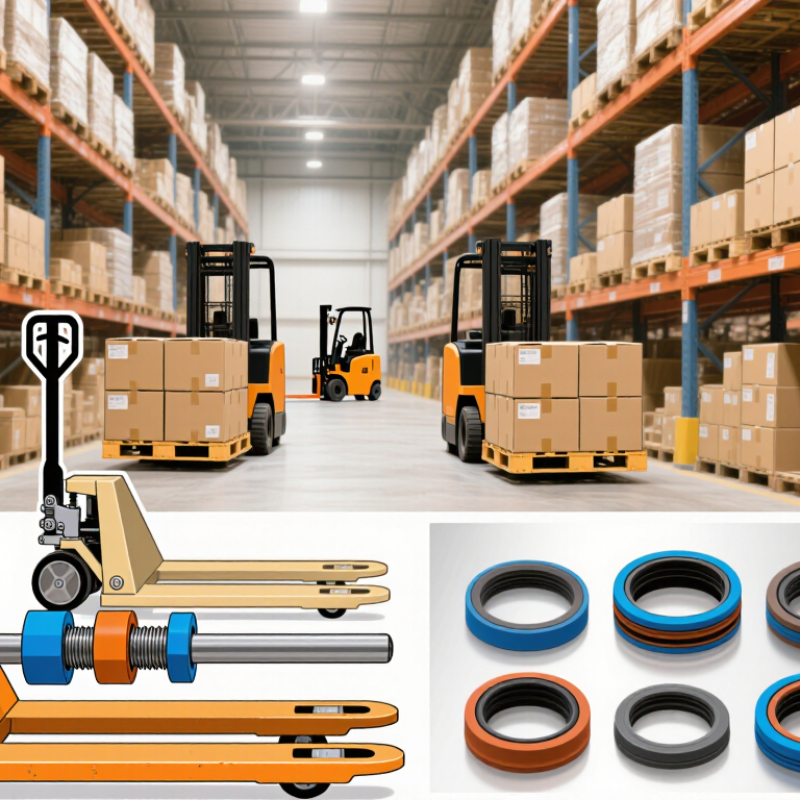
Pallet truck seals are small components that keep hydraulic oil inside working parts and block dust, grit, and moisture. They are commonly fitted around pump pistons, cylinder rods, valves, and connections. On a manual pallet truck, a worn seal may cause the forks to sink under load or rise slowly. You may also spot a thin oil film near the pump. Small parts matter.
Seals work in warehouses, loading bays, workshops, and distribution centers, where trucks face repeated lifting, turning, and contact with rough floors. Cold rooms and dusty storage areas can add extra stress. Material Handling Industry’s 2024 Annual Industry Report found that 55% of respondents planned to increase supply-chain technology investment over the next five years. That figure is not specific to seals, but it reflects the wider focus on dependable equipment and uptime. A seal cannot fix a bent rod or damaged cylinder; replacing it without checking the cause may only delay another failure.
Tips: Match the seal to the truck’s model and hydraulic system, and check the rod for scratches before fitting it. Use clean tools and the correct fluid. If the leak returns, inspect the pump and cylinder rather than changing seals repeatedly. Some wear is easy to miss. That deserves a second look.
A pallet truck depends on hydraulic pressure to lift a loaded pallet smoothly. Seals help keep that pressure inside the pump and lift cylinder. If a piston seal wears, oil may bypass it, causing slow lifting or a load that gradually sinks. Small parts matter.
Rod seals limit oil leakage where a moving rod exits the cylinder. Wiper seals clear dust and grit from the rod before it moves inward. This detail is important in warehouses, where cardboard fibers and floor debris can collect around the lifting assembly. Contamination can scratch sealing surfaces and shorten service life.
Seal material and dimensions must suit the oil, operating pressure, temperature, and movement of the equipment. During inspection, look for oily residue near the cylinder, damaged seal edges, or changes in lifting speed. Clean the surrounding area before checking; dirt can hide the source of a leak. A seal is not always the only cause, and replacing one without checking the rod or bore may lead to repeat failure. That is easy to miss. Routine inspection helps identify wear early, though it cannot prevent every breakdown.
Common Pallet Truck Seal Types and Materials
Pallet trucks rely on seals to keep hydraulic oil in and dust out. The main types include O-rings, rod seals, wiper seals, and backup rings. O-rings commonly seal static joints, such as fittings and cylinder end caps. Rod seals control oil around the moving piston rod, while wipers scrape dirt from its surface during each stroke. Backup rings help limit seal deformation when pressure rises. Small parts, big consequences.
Material choice depends on pressure, temperature, oil compatibility, and movement speed. Nitrile rubber is widely used for general hydraulic applications and offers practical resistance to mineral oils. Polyurethane often suits dynamic seals because it resists abrasion from repeated movement. PTFE can work well where low friction or chemical resistance matters, but it may need a suitable design to stay in place. No material fits every truck.
Inspect the seal groove as well as the seal itself. A nicked edge, hardened surface, or flattened O-ring can lead to leakage, even when the replacement looks correct. Clean the housing carefully before fitting parts, and avoid stretching a seal more than necessary. In real maintenance, matching dimensions and operating conditions matters more than choosing a material by name alone. Measurements can be imperfect, so verify them against the equipment specifications.
When evaluating Chinese pallet truck seal manufacturers, start with the seal’s working conditions, not a catalogue photo. Note cylinder dimensions, hydraulic fluid, pressure, temperature range, and expected duty cycles. Ask whether the supplier can review a drawing and explain its proposed material and profile. A reliable answer should include limitations, not just promises. Small details matter.
Request samples from a production batch and check dimensions with suitable measuring tools. Inspect lip edges, surface finish, and packaging for dust or deformation. Ask for material identification, batch records, inspection criteria, and details on how rejected parts are handled. If possible, trial the seals in the actual hydraulic assembly, then monitor leakage and wear over repeated operating cycles. One quick fit test is not enough.
Review process control rather than relying on a polished factory tour. Confirm who controls tooling, material changes, and final inspection, and ask for relevant test data. Compare technical clarity and response times alongside price. A low quote can hide compromises. Even a careful audit has gaps; seal performance also depends on installation, oil cleanliness, and maintenance. Keep those variables in view.
Sourcing pallet truck seals in China begins with a clear specification, not a price comparison alone. Share drawings, dimensions, material preferences, hardness range, and working conditions with potential suppliers. Seals exposed to hydraulic fluid, dust, and repeated movement need suitable material and lip geometry. Ask about sample production, tooling, and how design changes are recorded. A polished product sheet helps, but it does not prove consistent production.
Quality checks should cover more than appearance. Compare sample dimensions with the drawing, inspect the sealing lip for nicks, and check material hardness with suitable equipment. For repeat orders, request batch records and agree on an inspection plan before production. One useful step is testing samples in the actual equipment, when practical. Paperwork can miss real operating conditions. Supplier support matters too: confirm who handles technical questions, replacement samples, and production delays, and how quickly they respond. A missed detail can still happen.
Tips: Send one approved reference sample with the drawing. Keep inspection results from each delivery. Ask the supplier to explain any material or process change before shipment, rather than after a seal fails. Be specific, but stay open to revising a requirement when test results show it needs work.
Practical sourcing checklist for hydraulic pallet-truck seals. Requirements vary by design, fluid, temperature, pressure, and operating conditions; confirm the approved drawing and application specification before ordering.
| Evaluation Area | What to Specify or Check | Verification Method | Supplier Evidence and Support |
|---|---|---|---|
| Seal type and location | Identify each seal by assembly position and function, such as piston seal, rod seal, wiper, O-ring, or backup ring. Provide the mating-part drawing and installation details. | Compare the proposed profile and dimensions with the approved drawing; review fit, groove geometry, and assembly direction. | Request a labeled part list, dimensional drawing, material proposal, and confirmation that each item is matched to the correct location. |
| Material selection | Specify the hydraulic fluid, expected temperature range, pressure, motion, and exposure conditions. Common seal materials include NBR, polyurethane (PU), and FKM; suitability depends on the application. | Check compatibility information against the actual fluid and operating conditions. Confirm the exact compound rather than relying on a generic material name. | Request a material data sheet and batch traceability. Ask the supplier to document any material substitution for written approval before production. |
| Dimensions and tolerances | Define dimensions, tolerances, profile, and critical features from the product drawing. For O-rings, ISO 3601 may be relevant; other seal types require the applicable drawing or product standard. | Inspect samples with suitable calibrated measuring equipment and use agreed inspection methods for flexible or non-circular parts. | Request a first-article dimensional report and confirmation of drawing revision, measurement method, and inspection equipment calibration status. |
| Visual workmanship | Set acceptance criteria for surface condition, parting lines, flash, cuts, cracks, contamination, and deformation, taking the seal design into account. | Conduct visual inspection under suitable lighting and compare results with approved samples or documented defect limits. | Ask for the supplier’s defect classification, inspection records, and a corrective-action process for nonconforming lots. |
| Hardness and material checks | State the required hardness value and test scale in the drawing or specification; do not assume one hardness is suitable for every seal profile or service condition. | Check hardness using the specified method and appropriate test specimen. Use material identification or laboratory testing when required by the risk level. | Request batch-level test results and the test method. Agree in advance whether independent laboratory verification is required for initial approval or changes. |
| Performance validation | Define the relevant operating conditions, including fluid, pressure, temperature, stroke or rotation, and expected duty cycle. | Validate in the intended assembly or a representative test setup. Check for leakage, wear, extrusion, and damage against agreed acceptance criteria. | Request test conditions, sample identification, results, and a clear distinction between supplier qualification tests and production-lot inspection. |
| Production consistency | Confirm production controls for raw materials, mixing or compound supply, molding, finishing, and final inspection as applicable. | Review the inspection plan and compare production samples across batches. Verify that changes to material, tooling, or process are controlled. | Ask for lot numbers, inspection records, change-notification procedures, and retention-sample practices where appropriate. |
| Packaging and storage | Specify packaging that prevents contamination, deformation, abrasion, and loss of lot identification during handling and transport. | Check packaging condition, part identification, quantity, and traceability at receipt; store seals according to the material supplier’s guidance. | Confirm packing details, labeling format, shelf-life information where applicable, and procedures for damaged or mixed-lot shipments. |
| Supplier qualification | Assess technical capability, process control, communication, lead-time reliability, export readiness, and ability to support repeat orders. | Review sample quality, documentation completeness, response to technical questions, and performance during a controlled trial order. | Request a capability overview, quality-system documentation, references where available, and named contacts for engineering and order coordination. |
| Order and change control | Record part numbers, drawing revisions, material, quantities, packaging, inspection requirements, and delivery terms in the purchase specification. | Check order acknowledgement against the approved specification and review any proposed deviation before production or shipment. | Agree on a written change-approval process, nonconformance reporting, replacement or corrective-action arrangements, and shipment-document requirements. |
