

China Best Dinosaur Fossils Replica Suppliers for Global Buyers
China has become a major sourcing destination for high-quality dinosaur replicas, serving museums, educators, collectors, and themed attractions worldwide. Reliable suppliers combine skilled sculpting with digital scanning, molding, painting, and durable finishing techniques. Their work should present Dinosaur Fossils with scientific respect, not merely visual excitement.
Professional buyers need more than attractive photographs. They should examine material specifications, production samples, dimensional drawings, safety documents, and clear commercial invoices. Experienced suppliers can explain whether a replica uses resin, fiberglass, polyurethane, or reinforced metal structures. They should also distinguish manufactured replicas from genuine specimens and provide accurate labeling for every product.
Details matter. A well-made replica may show textured vertebrae, carefully painted mineral tones, and stable internal supports. Outdoor models require UV-resistant coatings and drainage planning. Indoor exhibits may need lighter structures and child-safe surfaces. Export packaging should protect fragile claws, teeth, and tail sections during long transport.
Not every supplier communicates with the same precision. That is a real concern. Some catalogs may use broad descriptions or outdated images. Buyers should verify factory capabilities through videos, samples, independent inspections, and written quality agreements. Responsible sourcing also requires respect for cultural heritage laws, customs rules, intellectual property, and protected fossil regulations. This guide examines China’s leading replica suppliers through product quality, documentation, customization, shipping reliability, and professional service. The goal is practical confidence, though no supplier deserves trust without verification.
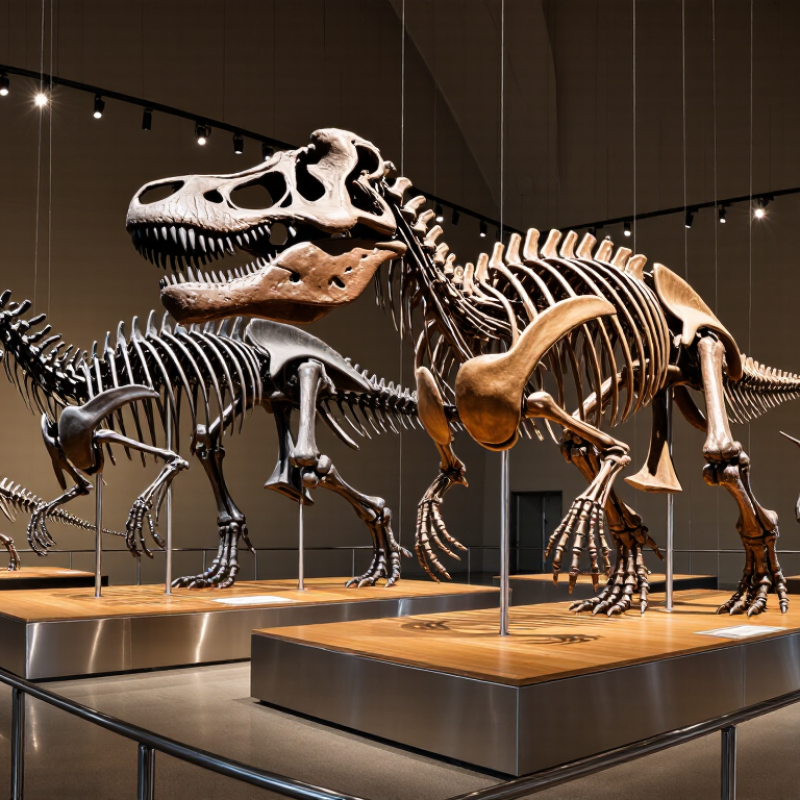
Dinosaur Fossil Replicas Explained: Casts, 3D Prints, and 1:1 Museum Models
For global buyers, dinosaur fossil replicas usually fall into three categories: casts, 3D prints, and 1:1 museum models. A cast copies an original surface through silicone molds, resin, or plaster. It can preserve tiny tooth marks and layered textures. However, mold seams may appear along the jaw or vertebrae. Buyers should request close-up photos before approval.
A 3D print begins with a digital scan or reconstructed mesh. It supports lighter shipping, repeat production, and easy size changes. The 2024 Wohlers Report valued the global additive manufacturing industry at about $20.04 billion in 2023, with 11.1% annual growth. Grand View Research estimated the 2023 3D-printing market at approximately $20.68 billion. The different figures reflect varying market definitions. They also show why supplier capability matters. Ask about scan resolution, layer height, resin type, sanding, and color matching.
A 1:1 museum model demands stronger control. Its steel frame must support long bones without visible bending. Surface paint should follow documented fossil references, not imagination. In supplier audits, I look for labeled assembly drawings, material samples, inspection photos, and a clear replica statement. A shipping crate needs foam around fragile vertebrae, not only loose paper. Perfect accuracy is difficult. Even museum-style reconstructions may include scientific assumptions. Reputable China-based suppliers should disclose those assumptions, provide revision records, and keep the final finish consistent across every section.
China Best Dinosaur Fossils Replica Suppliers for Global Buyers - Dinosaur Fossil Replicas Explained: Casts, 3D Prints, and 1:1 Museum Models
| Replica Category | How It Is Made | Common Materials | Typical Scale | Surface and Detail Quality | Best Applications | Customization Options | Relative Weight | Durability for International Shipping | Key Buyer Verification Points |
|---|---|---|---|---|---|---|---|---|---|
| Molded Fossil Cast | A mold is taken from an original fossil, approved replica, or scanned master. The mold is then filled with a casting material and finished by hand. | Polyurethane resin, epoxy resin, plaster, fiberglass reinforcement, and mineral fillers. | Commonly 1:1; smaller educational casts may be produced at reduced scale. | Reproduces recognizable relief, texture, cracks, and anatomical contours when the mold is accurate. | Museums, universities, visitor centers, classroom collections, exhibitions, and educational displays. | Scale, coloration, mounting holes, support frames, labels, simulated matrix, and surface aging. | Medium to heavy, depending on size, reinforcement, and whether the interior is solid or hollow. | Rigid resin and fiberglass structures normally require protective foam, edge guards, and a reinforced crate. | Request mold origin, dimensional drawings, material specifications, photos of the unfinished cast, and a written statement that the item is a replica rather than an original fossil. |
| 3D-Printed Replica | A digital 3D model is printed layer by layer using additive manufacturing technology and then sanded, assembled, primed, and painted. | PLA, PETG, ABS, photopolymer resin, nylon, or other compatible thermoplastics and resins. | From palm-sized teaching pieces to full-size bones assembled in sections. | Digital accuracy can be excellent, but visible layer lines may require sanding, filler, or coating. | Affordable teaching aids, prototypes, research visualization, trade displays, and lightweight exhibits. | Digital scaling, hollow or solid construction, segmented printing, color matching, logos on display bases, and replacement parts. | Usually light to medium; hollow printing can significantly reduce weight for large components. | Parts can be packed separately, although thin printed sections may need additional impact protection. | Confirm the digital file source, print resolution, wall thickness, assembly method, post-processing standard, and whether the final model is suitable for outdoor or high-temperature use. |
| 1:1 Museum Model | A full-size display is developed from scientific references, scans, engineering drawings, or approved reconstruction data, then built as a reinforced structure with detailed finishing. | Fiberglass, polyurethane foam, steel or aluminum frames, epoxy coatings, resin details, and professional paints. | Full-size 1:1 scale is standard; custom reduced scales are also possible for limited exhibition space. | Designed for visual impact, accurate proportions, realistic texture, and coherent assembly of multiple parts. | Museum halls, science parks, large exhibitions, themed attractions, educational institutions, and public venues. | Anatomy, pose, skin or feather treatment, color scheme, internal steel frame, modular sections, bases, lighting integration, and visitor-safety features. | Medium to very heavy; the external shell may be lightweight, but internal frames and bases add mass. | Large models should be divided into labeled sections with engineered connection points and custom crates. | Request assembly drawings, part numbering, structural load information, crate dimensions, installation instructions, flame-retardancy requirements, and maintenance guidance. |
| Display Fossil Plate | A replica of a fossil-bearing slab is cast or modeled with fossil impressions, reconstructed bones, and a surrounding matrix. | Resin, plaster, fiberglass, mineral powder, pigment, and protective clear coatings. | Usually near original size; wall-mounted or tabletop versions are common. | Quality depends on the fidelity of the fossil impression, matrix texture, pigment work, and edge finishing. | Wall displays, educational panels, reception areas, geological exhibits, and retail collections. | Fossil layout, matrix color, mounting system, plaque area, thickness, hanging hardware, and protective coating. | Light to medium for hollow fiberglass versions; heavier for solid plaster or mineral-filled panels. | Flat crates, corner protection, moisture control, and vibration-resistant packing are recommended. | Confirm panel thickness, hanging capacity, mounting instructions, surface coating, and resistance to humidity during sea or air transport. |
| Educational Bone Set | Individual replica bones are cast or printed as a coordinated collection for identification, comparative anatomy, or assembly exercises. | Resin, plaster, fiberglass, polyurethane, PLA, PETG, or photopolymer resin. | Hand-sized teaching pieces through partial or full skeletal sets. | Priority is placed on recognizable anatomy, correct labeling, safe handling, and repeatable dimensions. | Schools, universities, laboratories, training rooms, traveling exhibitions, and educational workshops. | Bone selection, scale, color coding, labels, storage cases, magnetic connectors, and assembly stands. | Light to medium, depending on the number of pieces and whether the bones are hollow or solid. | Multiple smaller pieces are easier to inspect, replace, pack, and distribute internationally. | Check piece count, labels, dimensional consistency, edge safety, replacement-part availability, cleaning requirements, and packaging for repeated classroom use. |
Note: Specifications are typical industry ranges and may vary according to the fossil reference, digital model, final dimensions, materials, finishing process, packaging method, and destination-country requirements. A replica should be clearly identified as a reproduction and should not be marketed as an original fossil.