Top 10 Best Electric Construction Equipment for Sustainable Building?
The construction industry is undergoing a significant transformation with the introduction of electric construction equipment. In recent years, emissions from construction activities have raised concerns. According to the World Economic Forum, construction accounts for 38% of global carbon emissions. This staggering figure urges the sector to adopt more sustainable practices. Electric equipment could be a vital part of this transition.
Electric construction equipment includes electric excavators, loaders, and cranes. These machines offer significant reductions in noise and air pollution. A report by the International Energy Agency (IEA) highlights that the shift to electric machines can cut greenhouse gas emissions by up to 50% compared to traditional diesel-powered models. However, the adoption rate remains low, partly due to high initial costs and limited charging infrastructure.
The benefits of electric construction equipment are clear. They can enhance worksite efficiency while promoting sustainability. Yet, many companies remain reluctant to invest in these technologies. Operational challenges, such as battery life and performance in extreme conditions, need careful consideration. As the industry evolves, ongoing evaluation of electric machines is essential to ensure their effectiveness in real-world applications.
Overview of Electric Construction Equipment in Sustainable Building
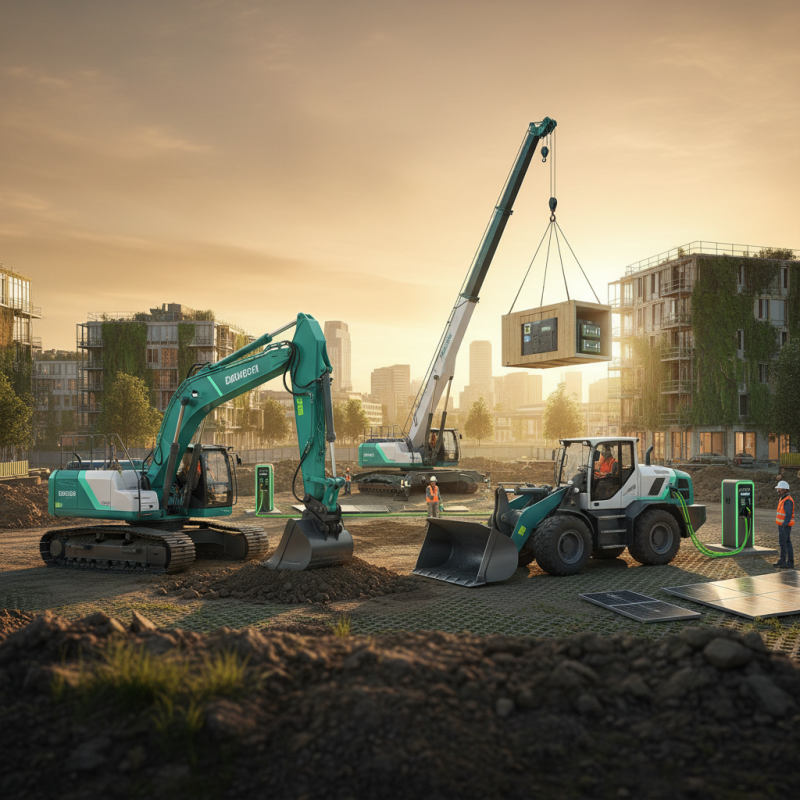
The construction industry is rapidly evolving, with electric construction equipment becoming a key player in sustainable building. Electric machinery is quieter and produces fewer emissions than traditional fuel-powered options. This shift represents a growing commitment to reduce our carbon footprint. Electric excavators, for instance, enable efficient earth moving with less environmental impact. Their design often incorporates more sustainable materials, which is crucial for greener construction sites.
However, the transition to electric equipment is not without challenges. Charging infrastructure remains limited on job sites. Battery life can be a concern during long work hours, making planning essential. Workers must adapt to new technology, which may require training and time. Despite these hurdles, the long-term benefits of lower operational costs and enhanced sustainability are significant. Electric equipment also improves air quality on sites, promoting a healthier work environment.
The embrace of electric construction tools not only represents innovation but also responsibility. As the industry moves forward, it must critically assess its reliance on traditional machinery. Finding the right balance between efficiency and sustainability will be crucial. The journey towards fully electric construction sites is ongoing, highlighting the importance of continuous improvement and reflection in sustainable practices.
Benefits of Using Electric Equipment for Eco-Friendly Construction
Electric construction equipment is transforming the building industry. These machines offer numerous benefits for eco-friendly construction. They produce zero emissions, which significantly reduces air pollution on job sites. Quieter operations also minimize noise disturbance, making construction activities more acceptable to nearby communities. This creates a better environment for workers and residents alike.
Switching to electric tools can also result in cost savings over time. Electric machinery often has lower maintenance costs. They require fewer repairs than their diesel counterparts, which helps manage budgets effectively. Investing in electric equipment might initially seem expensive. However, the long-term benefits often outweigh those early costs.
Tips for adopting electric construction equipment include evaluating your project's specific needs. Not all electric tools are suitable for every task. It's essential to research the durability and power of the equipment. Consider starting with one or two electric machines. Tracking their performance can help you assess the transition's feasibility. Encourage your team to share feedback on their experiences. This continuous learning process can lead to better decisions in the future.
Top Features to Consider When Choosing Electric Construction Tools
Choosing electric construction tools requires careful consideration. First, evaluate the power output of the tool. Understanding the energy efficiency can significantly affect project costs. According to the U.S. Department of Energy, electric tools can reduce energy consumption by up to 50%. This makes them not just sustainable, but cost-effective in the long run.
Battery life is another critical factor. Many electric tools now offer extended battery options. However, some tools still struggle with shorter run times. A survey by the International Energy Agency indicates that 45% of construction workers experience downtime due to insufficient battery life. Consider tools with fast charging capabilities to minimize delays.
Noise pollution is also essential in urban settings. Electric tools often operate at lower decibel levels compared to their gas counterparts. A noise reduction of 10 to 15 dB can enhance worksite safety. Yet, not all electric options provide this advantage. Check specifications for noise levels before purchase. Sustainability is not just about emission reduction; it's also about creating a comfortable work environment.
Review of the Top 10 Electric Construction Equipment Models
Electric construction equipment is revolutionizing the industry. These machines are quieter, cleaner, and more efficient. Many models now prioritize sustainability. They help reduce carbon footprints significantly on job sites.
Electric excavators offer impressive power and precision. They excel in tight spaces while minimizing soil disruption. Battery-operated bulldozers are becoming more prevalent. These machines operate with fewer emissions and lower energy costs. However, battery life can pose challenges on larger sites.
Safety features are enhancing user confidence. Reduced noise levels also limit disturbances to nearby areas. However, the initial cost may deter some buyers. Despite these hurdles, the shift toward electric construction tools is gaining momentum. The industry needs to address charging infrastructure and energy storage solutions. With more investment, electric equipment can transform construction into a more sustainable practice.
Top 10 Best Electric Construction Equipment for Sustainable Building
| Model |
Type |
Battery Life |
Power Output |
Weight |
Price Range |
| Electric Excavator A |
Excavator |
8 hours |
70 kW |
3,000 kg |
$100,000 - $120,000 |
| Electric Loader B |
Loader |
10 hours |
85 kW |
4,000 kg |
$90,000 - $110,000 |
| Electric Forklift C |
Forklift |
12 hours |
50 kW |
2,500 kg |
$40,000 - $60,000 |
| Electric Bulldozer D |
Bulldozer |
9 hours |
100 kW |
5,500 kg |
$130,000 - $150,000 |
| Electric Cranes E |
Crane |
8 hours |
75 kW |
8,000 kg |
$200,000 - $250,000 |
| Electric Dumper F |
Dumper |
7 hours |
60 kW |
3,200 kg |
$80,000 - $100,000 |
| Electric Scissor Lift G |
Scissor Lift |
10 hours |
40 kW |
1,500 kg |
$30,000 - $50,000 |
| Electric Telescopic Handler H |
Telehandler |
8 hours |
85 kW |
4,200 kg |
$120,000 - $140,000 |
| Electric Compact Loader I |
Compact Loader |
10 hours |
55 kW |
2,000 kg |
$50,000 - $70,000 |
| Electric Concrete Mixer J |
Concrete Mixer |
9 hours |
60 kW |
2,500 kg |
$45,000 - $65,000 |
Future Trends in Electric Construction Technology and Sustainability
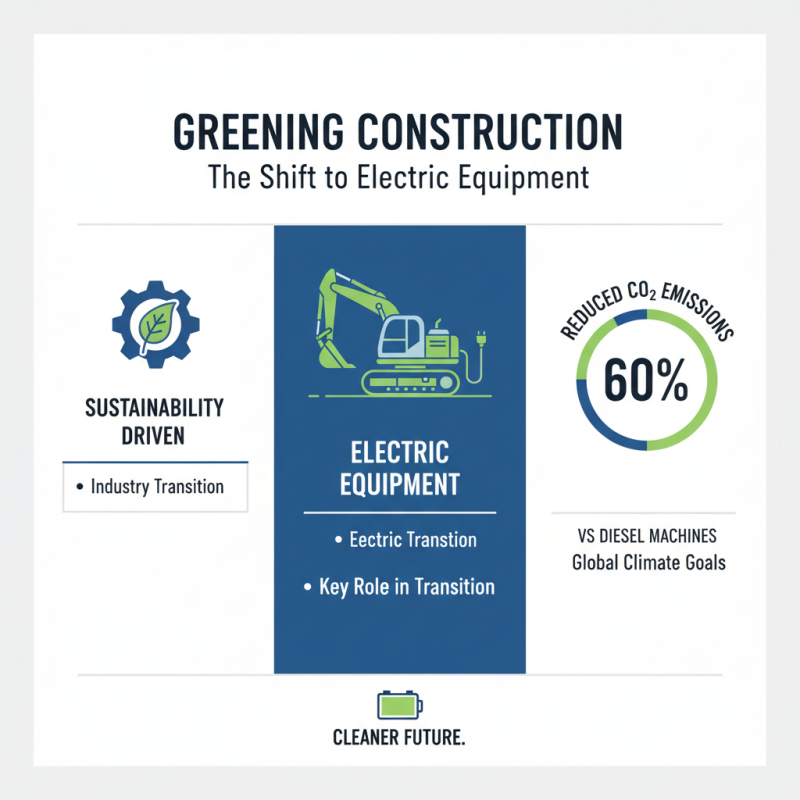
The construction industry is shifting towards sustainability. Electric construction equipment plays a vital role in this transition. Recent reports indicate that switching to electric machines can reduce carbon emissions by up to 60% compared to diesel counterparts. This is significant, especially in light of global climate goals.
An increasing number of construction companies are exploring electric machinery. A survey revealed that 70% of industry leaders prioritize sustainable practices. Electric equipment offers not only lower emissions but also reduced noise levels. This could improve working conditions on job sites. However, challenges remain. Battery technology is still evolving, and the initial investment can be high.
Industry experts suggest the need for infrastructure development. Charging stations must become more prevalent on construction sites. Moreover, some reports indicate that worker training is crucial. Without understanding, the shift to electric may stall. As trends progress, sustainability must not only be an afterthought but a core principle in construction.