Best Agricultural Tipper Trailers to Explore at Canton Fair 2026?
The upcoming Canton Fair in 2026 presents an exciting opportunity to explore the latest innovations in Agricultural Tipper Trailers. This year’s event, running from April 15 to May 5, will showcase advanced manufacturing techniques and machinery tailored for the agricultural sector. Attending this fair could revolutionize how farmers and suppliers connect.
Agricultural Tipper Trailers are essential for efficient farm operations. These trailers streamline the transportation of goods and materials, making farming processes smoother. However, choosing the right model can be challenging. Buyers must consider specific features like load capacity, durability, and compliance with international standards.
With advancements like AI-driven search functionalities, exhibitors at the fair will be more accessible. This technology allows for quick identification of suppliers with certifications like ISO and CE. Navigating the massive exhibition space of 1.55 million square meters will become easier. While the innovation is impressive, the reliance on technology raises questions. How will this affect personal interactions in business? Reflecting on this can enhance the overall experience at the fair.
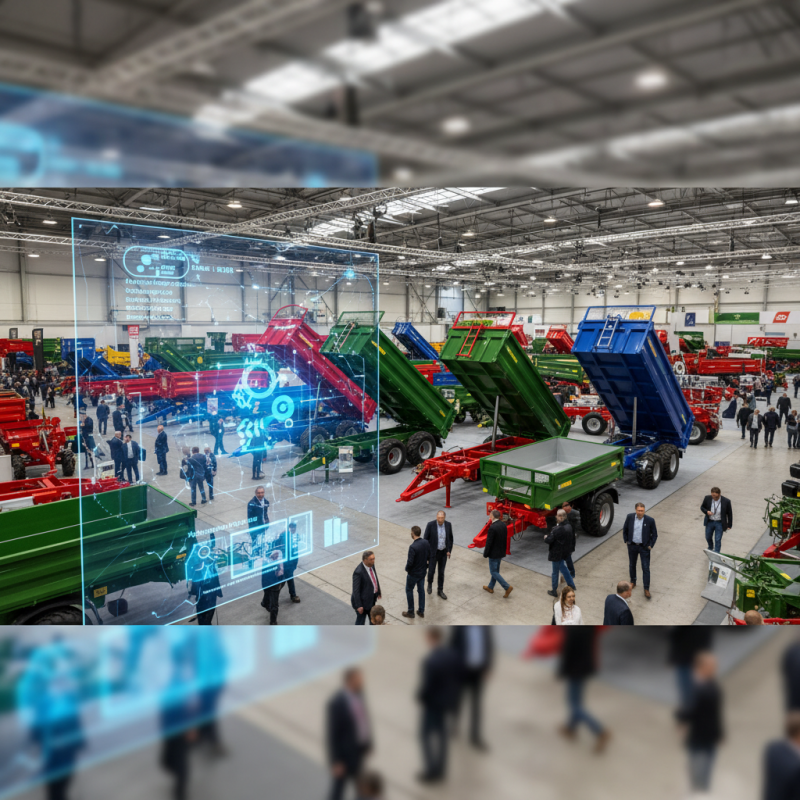
Overview of Agricultural Tipper Trailers and Their Importance
Agricultural tipper trailers play a pivotal role in modern farming operations. They are engineered for transporting bulk materials like grains, fertilizers, and produce. According to the Agricultural Engineers Association, over 60% of farm operations rely on tipper trailers for efficiency in logistics. This equipment enhances productivity by reducing loading and unloading times significantly.
Moreover, the importance of durability and design cannot be overstated. Many trailers are equipped with hydraulic systems that facilitate easy tipping actions, minimizing manual labor. A report by Market Research Future indicates that the demand for advanced tipping trailers will grow by 5% annually through 2028. However, not all models meet stringent quality standards, leading to reliability issues.
When exploring options, consider the capacity and material used for construction. Some trailers may have a lower initial cost but could require more maintenance. A balance between price and longevity is essential for farmers. Regular feedback from users often highlights concerns regarding tire quality and frame sturdiness. While many trailers perform well, some users report frequent repairs that divert focus from farming activities. This suggests that farmers should prioritize investing in quality over merely seeking the best deal.
Best Agricultural Tipper Trailers to Explore at Canton Fair 2026
| Model | Load Capacity (kg) | Trailer Weight (kg) | Material | Length (m) | Width (m) | Height (m) | Features |
| Model A | 5000 | 1200 | Steel | 4.5 | 2.2 | 1.5 | Hydraulic tilt |
| Model B | 8000 | 1500 | Aluminum | 5.0 | 2.4 | 1.6 | Multi-axle support |
| Model C | 6000 | 1300 | High-strength steel | 4.8 | 2.2 | 1.5 | Easy unloading |
| Model D | 7000 | 1400 | Fiberglass | 5.2 | 2.5 | 1.7 | Corrosion-resistant |
Key Features to Look for in Tipper Trailers for Farming Needs
When exploring tipper trailers for farming at the Canton Fair 2026, it's essential to focus on key features. A robust chassis is crucial for durability. Research indicates that trailers with a higher load capacity can significantly improve operational efficiency. In a recent industry report, over 70% of farmers stated they prefer models that can hold at least 10 tons. This capacity often determines the type of operations they can undertake.
Another important feature is the tipping mechanism. Hydraulic tipping systems are prevalent due to their reliability. Farmers prioritize models with quick tipping times. Reports show that faster unloading can reduce labor costs by up to 15%. However, users often overlook the maintenance requirements of these systems. Regular checks are essential to avoid hydraulic failures.
Additionally, ease of towing plays a vital role in the overall efficiency of trailers. Lightweight designs have gained popularity, but they must not compromise strength. It's a balancing act. Farmers sometimes face challenges with the stability of lighter models under heavy loads. Understanding these trade-offs can lead to better purchasing decisions.
Popular Brands Showcased at Canton Fair 2026
As the Canton Fair 2026 approaches, agricultural tipper trailers are gaining significant attention. This year promises a unique blend of innovation and reliability. The demand for efficient transport solutions in the agricultural sector continues to grow. According to recent industry reports, the agricultural trailer market is projected to reach $5 billion by 2026, showcasing a steady annual growth rate of 5.4%.
Prominent brands will reveal their latest designs and enhancements at the fair. Many companies focus on lightweight materials, which improve fuel efficiency. Notably, hydraulic tipping systems are now more advanced. These changes aim to reduce downtime on farms, allowing for quicker operations. However, not all models meet the high standards set by the industry. Some designs fall short in durability and load capacity. This is crucial for farmers who rely on their equipment every day.
The competition among brands is fierce. Innovations sometimes overlook essential user feedback. Farmers often seek simplicity alongside technology. Features that are complicated may discourage usage. This inconsistency can lead to wasted resources. Better communication between manufacturers and end-users is necessary. Attending the Canton Fair will allow stakeholders to discuss these challenges directly. The insights gathered could reshape future designs in meaningful ways.
Innovative Designs and Technologies in Tipper Trailers
The Canton Fair 2026 will showcase innovative designs and technologies in agricultural tipper trailers. These trailers are essential for transporting bulk materials efficiently. Manufacturers are introducing lightweight materials, improving fuel efficiency, and enhancing durability. This shift not only reduces transportation costs but also minimizes environmental impact.
A notable development is the integration of smart technologies. Some trailers now feature GPS tracking systems. This can help users monitor load weights and optimize routes. However, this technology can be complicated for some operators. There may be a learning curve associated with these innovations.
Another intriguing aspect is the focus on user-friendly designs. Many new models feature easy-to-use tilting mechanisms. This aspect can significantly reduce manual labor during unloading. Still, the challenges of maintaining these advanced systems can lead to downtime. Embracing these modern designs may require more training for operators. Overall, the balance between innovation and practicality will be crucial for the industry moving forward.
Comparative Analysis of Tipper Trailers from Different Exhibitors
The Canton Fair 2026 promises to showcase a variety of agricultural tipper trailers. Exhibitors often present innovative designs and robust features. While some trailers boast advanced hydraulic systems, others emphasize durability and weight capacity.
Each exhibitor brings unique specifications. For example, certain trailers have a higher payload, making them suitable for heavy-duty tasks. On the other hand, some focus on maneuverability in tight spaces. These differences can influence purchasing decisions.
Attendees might find it challenging to determine the best fit. Comparing features, specifications, and pricing can be overwhelming. It's crucial to examine the practicality of these trailers. A well-rounded approach to selection can yield better outcomes for farmers. Sometimes, the flashiest design may not meet real needs. Reflecting on past purchases is essential to avoid repeating mistakes.
Best Agricultural Tipper Trailers to Explore at Canton Fair 2026
This chart compares various metrics of agricultural tipper trailers expected to be showcased at the Canton Fair 2026. The dimensions assessed include capacity, durability, price, weight, and ease of use, providing insights for potential buyers.