2026 Top Digital Signal Isolator Manufacturers for Buyers
Selecting a Digital Signal Isolator manufacturer in 2026 is not just a matter of comparing catalog prices. Buyers need to match isolation ratings, channel count, data rate, package size, and power use to the actual system. A device on a factory control board may face different noise and temperature conditions than one inside a compact instrument. Details matter.
Reliable comparison means looking beyond headline specifications. Check datasheets for working voltage, common-mode transient immunity, propagation delay, and operating-temperature limits. Review qualification information, product lifecycle notices, sample availability, and technical support. Ask how performance is checked across production lots. A polished product page helps, but it cannot replace traceable test data or a clear revision history.
This guide introduces leading manufacturers and practical factors buyers can use to assess their options. It considers product breadth, documentation, support, and suitability for different design needs, rather than treating one specification as a universal winner. No shortlist is perfect; availability and capabilities can change, and a strong fit for one application may be a poor fit for another. Use the comparisons as a starting point, then verify current specifications with the manufacturer before finalizing a design.
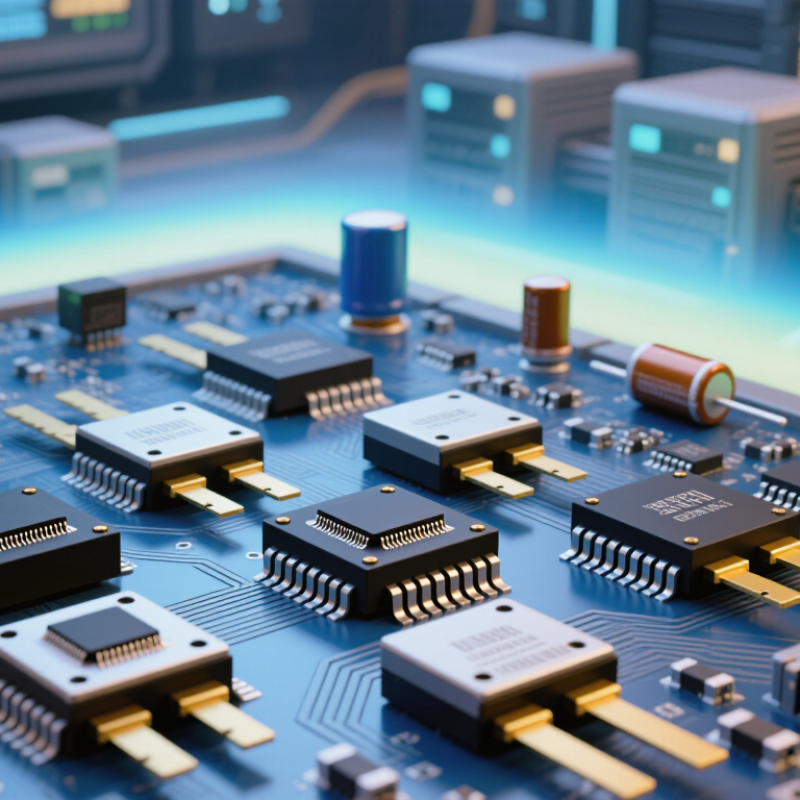
Digital Signal Isolators: Purpose, Architecture, and Key Applications
Digital signal isolators transfer logic signals between circuits without a direct conductive path. They help protect low-voltage controllers from ground shifts, switching noise, and electrical transients. Inside the device, capacitive or magnetic coupling carries a signal across an insulation barrier, where a receiver rebuilds the logic state. No metal bridge. In a motor drive, an isolator may need to preserve a gate command while fast voltage edges disturb the local ground. Buyers should compare working voltage, transient immunity, propagation delay, timing skew, and insulation lifetime—not just data rate. It is easy to overrate headline speed.
Architecture shapes where an isolator fits. Capacitive designs couple signals through on-chip electrodes; magnetic designs use microtransformers. Both require careful assessment of fail-safe behavior and board-level spacing. The IEA’s Global EV Outlook 2024 reports nearly 14 million electric cars sold in 2023, around 18% of global car sales. That growth increases demand for isolated sensing and control in battery systems, traction inverters, and onboard chargers. Industrial controllers, medical equipment, and renewable-energy converters also use isolation between noisy or differently grounded circuits. Not every channel is interchangeable. A datasheet helps, but testing under real switching conditions can expose layout problems that specifications alone miss.
How Digital Isolators Differ Across Technologies and Performance Ratings
Digital isolators may look similar in a catalog, but their internal technologies behave differently. Capacitive designs transfer data through an electric field and often support compact, high-speed channels. Magnetic designs use transformer coupling, which can suit robust signal transfer but may need careful attention to layout and electromagnetic noise. Optical isolation uses light across a barrier; it can provide strong separation, though speed, power use, and package size vary by design.
Ratings tell only part of the story. Check isolation voltage alongside common-mode transient immunity, or CMTI, because fast voltage edges can disrupt signals even when the isolation rating looks ample. Compare propagation delay, channel-to-channel matching, data rate, and power consumption under the conditions your circuit will actually face. A motor-drive board with sharp switching edges has different needs from a quiet sensor interface. Read the test conditions closely. Numbers without context are easy to misread.
There is no universal winner. That sounds obvious, yet it is easy to select a part by one headline rating. Review package clearances, operating temperature, and required certification with the full system in view. Then test the device on a representative board, where routing and nearby switching components can reveal issues a datasheet cannot. My choice might change after that test. That is useful evidence, not a failure.
Criteria for Evaluating Digital Signal Isolator Manufacturers
When comparing digital signal isolator manufacturers, start with the device’s actual operating conditions. Check working isolation voltage, transient withstand rating, common-mode transient immunity, propagation delay, and pulse-width distortion. Request test conditions, not just headline values. A CMTI figure without voltage, temperature, and test setup is hard to compare fairly. Details matter.
The IEC 60747-17:2020 standard provides a framework for evaluating capacitive and magnetic isolators, while UL 1577 addresses isolation withstand testing. Ask whether published ratings are supported by qualification reports and production screening data. Also review temperature range, package creepage, lifetime projections, and failure-analysis procedures. A neat datasheet is not proof of consistent manufacturing.
Market growth makes supplier diligence more important, but it does not prove product quality. The Semiconductor Industry Association, citing WSTS data, reported global semiconductor sales of $627.6 billion in 2024, up 19.1% from 2023. Buyers should therefore assess capacity planning, traceability, and change-notification practices alongside electrical performance. Request sample test reports and compare them with bench measurements on your own board. One weakness: published data may not reflect your layout or switching noise. Check that before approval.
Leading Digital Signal Isolator Manufacturers and Their Product Strengths
By 2026, leading digital signal isolator manufacturers will stand out through more than headline isolation voltage. Compare data rate, channel count, common-mode transient immunity (CMTI), propagation delay, power use, and package options under consistent test conditions. Capacitive and magnetic coupling designs have different trade-offs; the right fit depends on switching noise, board space, and timing needs. Manufacturing strengths also show in qualification records, production consistency, and useful reference layouts. Small details matter.
The Semiconductor Industry Association reported global semiconductor sales of $627.6 billion in 2024, up 19.1% year over year. This broad industry figure is not an isolator-market estimate, but it reflects the scale of the chip supply chain buyers depend on. When comparing suppliers, review test conditions, temperature limits, isolation ratings, and product-lifecycle support. A strong datasheet helps, but it cannot predict every board-level surprise.
Tips: Test samples on your own board. Check isolation performance and signal timing during switching. Ask for reliability data and confirm lead times before locking the design.
2026 Top Digital Signal Isolator Manufacturers for Buyers
Representative digital isolator data-rate grades found in commercial product specifications.
Higher data-rate options can support faster signal transmission. These are representative specification grades, not a manufacturer ranking; the rate available depends on the specific device, channel configuration, and operating conditions.
How Buyers Can Compare Suppliers, Certification, and Lifecycle Support
A buyer comparing digital signal isolators should look beyond headline isolation voltage. Check working voltage, creepage distance, channel configuration, propagation delay, and common-mode transient immunity against the actual board layout and switching environment. Ask suppliers for device-level test data, not only catalog summaries. Paper claims are not enough. Confirm which parts have independent safety recognition, and whether the stated ratings apply to the exact package and operating conditions. UL 1577 and IEC 60747-17 are useful references, but certification scope can differ by device.
Lifecycle support deserves equal attention. Request a written change-notification policy, product traceability details, expected production status, and a clear last-time-buy process. McKinsey’s 2020 report, Risk, Resilience, and Rebalancing in Global Value Chains, found that 93% of surveyed supply-chain leaders planned to increase resilience. That finding supports checking continuity plans, not assuming a supplier can guarantee long-term availability. Ask how technical questions, quality issues, and obsolescence notices are handled, and who owns each response. Details matter.
Tips: Compare the same test conditions across suppliers. Save certificates, test reports, and revision dates with the approved part record. Ask for proof. A short review can still miss a critical detail, so have engineering and procurement check the evidence together.